

15 April 2026
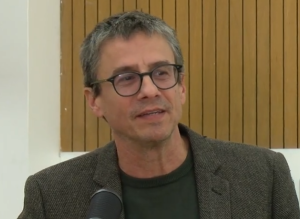
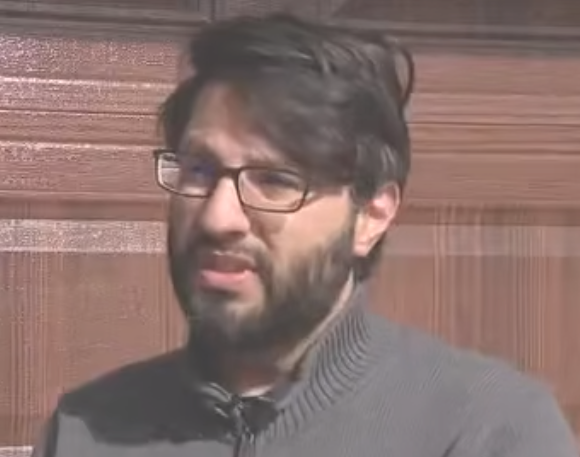
Dr Aria Fani, Director of the Middle East Center at the University of Washington and an Iranian by birth, spoke out publicly against US aggression against Iran. As this article by Sammy Baroud in The Palestine Chronicle explains, Fani’s circular email apparently was the last straw for the University’s administration, after his repeated expressions of sympathy for Palestinians facing genocide in Gaza and criticism of Zionism, and he was fired. Opinion in the United States on Israel and Palestine has been shifting in recent years but evidently not enough among the senior personnel of universities such as Washington who are prepared to destroy the career of academics like Dr Fani, if they speak truth to power.
‘Humanity First’: Professor Fired over Anti-War Email at University of Washington

By Sammy Baroud
In a move raising concerns over academic freedom, University of Washington professor, Dr. Aria Fani, was fired from the Director position at the Middle East Center, after he criticized the US-Israeli war on Iran, terminating his three-year contract signed in 2025.
How It Started
On Monday, March 9, Dr. Fani sent an email outlining his analysis of the attacks on Iran by the Trump administration and Israel, which encapsulated the present moment and provided vital geopolitical context.
The message was sent to an email list that included University of Washington students, faculty, alumni, and other community members who had been involved in the Middle East Center.
Fani described being subsequently notified about his contract termination in a brief five-minute phone call with the director of the Jackson School of International Studies, where he was told that his email wasn’t appropriate and that, although his statements weren’t antisemitic, they were supposedly bordering on antisemitism.
Fani conveyed that the situation “illuminates what people’s feelings are being protected. Not Palestinian or Middle Eastern students, even though they have reason to feel attacked due to the UW’s silence over scholasticide in Gaza and even Iran.”
Public Response
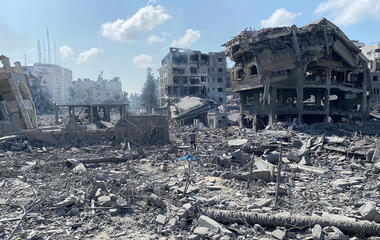
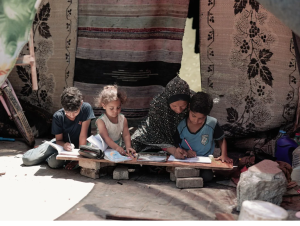
With the targeting and systemic destruction of educational infrastructure, students, and faculty throughout the ongoing Gaza genocide, and now with the joint war on Iran—which commenced with the strike on an elementary girls’ school in Mindab, killing over 170 people—neutrality within academic institutions has, for good reason, struck people as disingenuous.
This context has led many to view institutional claims of neutrality as increasingly untenable.
Fani voiced this same concern, saying that the University “presents itself as neutral, but that neutrality was defaulting to the Zionist narrative.”
The nature of this dismissal has, expectedly, garnered widespread media attention, as many argue it is reflective of a broader American political climate that restricts free speech whenever that speech is critical of Israel or US foreign policy.
When asked if his dismissal caught him by surprise, Dr. Fani said,
“I definitely expected a response, but I operated with indifference. I didn’t care when a response would come or where it would come from… In moments like that, you have to lead with your humanity. Forget about procedures and bureaucracy. You have to put humanity first.”
In the face of his termination, Dr. Fani still showed optimism about the situation, stating that “Even in this failure of leadership to allow a select group of people to trump everyone else, in this moment, you can still see successes.”
“No director of the Middle East Center had been fired, garnering this much attention, precisely because it succeeded. It created a space that mattered to students. In this moment of failure, we see an institution that is so blinded by its own pursuit of money, business as usual, and adherence to the status quo that it is jeopardizing its own potential.”
Fani expressed that, despite viewing the University as having a “chequered past,” a condition he argued is fundamentally rooted in imperialism, he still saw it as an opportunity. “When you have left a massive group of people who feel unrepresented and unheard, and then make them feel represented, it can bring life to the center. I got to bring life to the center.”
Fani’s Leadership
The very first community event that the Middle East Center undertook under the co-directorship of Fani in October 2024 was a memorial for Ayşenur Ezgi Eygi, a University of Washington alum who had graduated just months prior to being fatally shot by the Israeli military while peacefully protesting against illegal Israeli settlements in the West Bank in September 2024.
This memorial was essential in bringing together a University community that had been so recently shocked by the tragedy. Fani recalls this event, describing it as one that encompassed a “crushing loss,” especially with the presence of Ayşenur’s family members alongside the parents of Rachel Corrie, another Washingtonian who was killed by the Israeli military in 2003.
The memorial event, Fani says, “really set the tone for how we envisioned this center.”
Hanady Shaqur, a University of Washington alumnus and activist who collaborated with Dr. Fani over the last few years of his leadership at the Middle East Center, recalled the experience of the memorial.
“Aysenur brought us together,” she said. “After she was killed in 2024, my first real conversation with Aria was planning her memorial in the fall semester that followed. We were gutted. But while grief made most people go quiet, Aria went loud—not with noise, but with insistence.”
Termination Felt across the Student Body
Within the surrounding media frenzy and response to the termination, much of the coverage has failed to convey that, despite Fani’s early removal as director of the Middle East Center, significant work was accomplished during his short tenure.
Through his leadership in the Middle East Center, bridges were built to foster discussion, a community was animated, and, most importantly, to Fani, underrepresented people felt included.
This is demonstrated not only in the types of events that were hosted by the Middle East Center, but also by the affinity held for Dr. Fani by students on campus.
Conner, an Iranian-American University of Washington student who had taken classes with Professor Fani, said, “I always saw Professor Fani as a really good example of what an academic should be.”
“What stands out about him to me is his honesty… He never tiptoes around issues like imperialism or genocide; you can actually find him protesting in support of Palestine with his students. So I think Iranian students, and Middle Eastern students more broadly, gravitate toward him.”
Humayl, another student who took his class, had this to say:
“Professor Fani’s ability to speak out on worldly concerns in ways that could appeal to all types of students made his impact so meaningful. I always admired how he could weave sensitive, yet informative, topics into each class discussion, encouraging collaboration and fostering a sense of comfort among students.”
Palestinian student activist Shaqur fondly described the beloved professor with these words:
“Aria has the heart and knowledge for campus activism; every time students would ask for help with a campaign or event, he would say yes, no questions asked… It meant the world to my fellow students and me to see a faculty member so dedicated and fully committed.”
Amidst the shockwave that Fani’s contract termination has sent through the University of Washington community and the media, Fani reflected on the decision, saying,
“This is a moment where we can celebrate a degree of success. If they wanted to shut me down because they didn’t like my characterization of Zionism, the message has been spread through the media.”
“It’s invaluable that in the space of two years we saw what the Middle East Center could be, and we saw why it never became that… We have to take the platform somewhere else. It served for the time being and no longer does… We showed what is possible. Now the ball is in their court.”