






20 May 2026
In order to establish the Jewish claim to Palestinian land, Israelis have not only undertaken their own archaeological research. They have also halted work by Palestinian archaeologists and appropriated their sites. The American Middle East Studies Association of North America (MESA) has strongly protested this grotesque abuse of science.
Protesting Israeli Control over Palestinian Archaeological Sites
Committee on Academic Freedom 05/16/2026
Committee on Academic Freedom | Middle East Studies Association of North America | –
Letter to document and condemn Israel’s efforts at taking full control over and re-defining archaeological sites in the occupied Palestinian Territories
Volker Türk
UN High Commissioner for Human Rights
Khaled El-Enany
Director-General, UNESCO
Teresa Patrício
President, ICOMOS
Peter Stone
President, Blue Shield International
Koji Mizoguchi
President, World Archaeological Congress
Francesca Albanese
United Nations Special Rapporteur on the oPt
Your Excellencies, Presidents, Special Rapporteur:
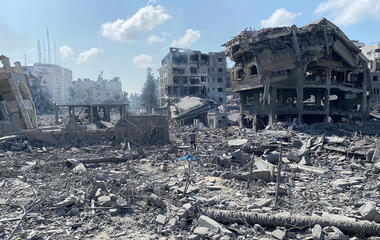
We write on behalf of the Middle East Studies Association of North America (MESA) and its Committee on Academic Freedom (CAF) to express our urgent concern regarding recent actions to appropriate, confiscate, and annex archaeological sites in the occupied West Bank, including East Jerusalem, by Israeli military and civilian authorities. On 12 May 2026, the Israeli Knesset’s plenary session advanced in the first reading a bill, sponsored by MK Amit Halevi (Likud) and backed by Minister of Heritage Amihai (Otzma Yehudit), aimed at creating a new civilian statutory authority — the Heritage Authority — under the Ministry of Heritage, which is, in turn, under the control of Israeli political appointees and members of the settler movement. This authority is intended to replace the military-led Civil Administration’s Staff Officer for Archaeology (SOA), which currently governs archeological sites and antiquities in Area C in the West Bank. The proposed bill uses archaeological and cultural heritage as a mechanism to shift Palestinian land from military control as a result of belligerent occupation to direct annexation. In conjunction with the mass destruction of archeological and heritage sites during Israel’s genocidal violence on Palestinians in Gaza (see our statement dated 11 March 2024), the bill furthers the systemic denial of Palestinians’ cultural rights and the erasure of Palestinian heritage.
MESA was founded in 1966 to promote scholarship and teaching on the Middle East and North Africa. The preeminent organization in the field, MESA publishes the International Journal of Middle East Studies and has nearly 2600 members worldwide. MESA is committed to ensuring academic freedom and freedom of expression, both within the region and in connection with the study of the region in North America and elsewhere.
If passed by the Knesset, the creation of the Heritage Authority would violate numerous international treaties related both to the conduct of belligerent occupation and the regimes for protecting world heritage. First, the bill would violate the 1954 Hague Convention for the Protection of Cultural Property in the Event of Armed Conflict and the Fourth Geneva Convention by institutionalizing a permanent civilian body to exercise sovereignty in occupied Palestinian territory over the land and cultural heritage of the Palestinian people. Second, the proposed bill would also violate the framework for the protection of world heritage established by the United Nations Educational, Scientific and Cultural Organization (UNESCO). The backbone of this framework is encapsulated in two core treaties: the 1970 UNESCO Convention on the Means of Prohibiting and Preventing the Illicit Import, Export and Transfer of Ownership of Cultural Property and the 1972 Convention Concerning the Protection of the World Cultural and Natural Heritage. The proposed law would facilitate violations of both treaties by depriving Palestinians of authority over their cultural and natural heritage while facilitating the possible looting or destruction of antiquities and artifacts. For example, the proposed Heritage Authority bill stipulates that responsibility for repairs of the Tomb of the Patriarchs/Ibrahimi Mosque in Hebron be transferred from the Palestinian Municipality of Hebron to Jewish settlements. Such a shift in control and administration of the site would amount to an unlawful transfer of Palestinian cultural heritage authority to actors bent on the erasure of Palestinian identity, potentially enabling the removal and even destruction of artifacts and relics tying this and other sites in the West Bank to Palestinian heritage.
In addition to violating both international humanitarian law and the broad international legal framework governing world heritage, the law would also breach the 1997 Hebron Agreement, concluded as part of the Oslo Accords. The Hebron Agreement established a protocol for control over the city of Hebron through the division of Hebron into two sectors, reorganizing control over the city and placing one sector under Palestinian civil and security control. One of the critical purposes of that agreement was to guarantee arrangements for both Jewish and Muslim worshippers to access holy sites located in Hebron. The proposed bill would violate the allocation of authority under the Agreement essentially cutting Palestinians off from their access to the Ibrahimi Mosque. Indeed, the proposed bill is designed to complement a broader initiative by the Israeli government to expand civilian Israeli control over occupied Palestinian lands in Areas A and B of the West Bank in violation of the Fourth Geneva Convention and the Oslo Accords. This includes the approval of a dedicated municipal administration for Rachel’s Tomb, even though the site is located within the municipal boundaries of Bethlehem, in Area A, where Palestinian authorities are allocated civilian and security control. The Israeli security cabinet’s decision to expand civilian control in this way amounts to a stealth annexation of the West Bank in violation not only of the law of belligerent occupation but also the United Nations Charter, which prohibits acquisition of territory through the use of force.
These recent legal and legislative developments are only the latest in the longstanding theft and weaponization by the Israeli government of Palestinian archeological heritage in the West Bank. Israel’s use of archeology as a pretext for dispossession is well documented. A 2024 policy paper by Professor of Islamic History and Archaeology Omar Abed Rabo of Bethlehem University highlights Israeli policies designed to seize and capture the cultural heritage and natural resources of the Palestinian people, with the aim of dispossessing Palestinians under the cover of archeological and natural protection laws. Similarly, the 2025 report by the Independent International Commission of Inquiry on the Occupied Palestinian Territory, including East Jerusalem, and Israel, documented numerous instances of the seizure of cultural and religious sites, including in Susya, Sebastia, Battir, and Silwan. All of these activities amount to violations of another international instrument adopted by UNESCO in 2003, the Declaration concerning the Intentional Destruction of Cultural Heritage. Responding to the destruction of the Bamiyan Buddhas in Afghanistan, this 2003 Declaration clarifies and reinforces states’ responsibilities to prevent the destruction of cultural heritage whether in peacetime or during armed conflict. These examples of the ways in which Israel has usurped authority over Palestinian heritage sites constitute violations of UNESCO protective frameworks in two regards: first, they are pretextual uses of archaeological claims to facilitate the displacement of Palestinian communities and the seizure of territory to achieve the annexation of lands acquired through the use of force. Second, they are an attempt to manipulate control over cultural heritage sites to erase or destroy Palestinian cultural patrimony while promoting and reinforcing a preferred and selective narrative about heritage that privileges Jewish historical claims at the expense of Palestinian identity.
The case of Susya, a village southwest of Hebron, is one of the clearest, long-running examples of how archaeology, land designation and settlement policy intersect in the South Hebron Hills to displace Palestinians and appropriate their cultural heritage as part of an annexationist project. In 1986, Israeli authorities declared part of the original Palestinian village an archaeological site, focused on the remains of an ancient synagogue. On this basis, the inhabitants of Susya were forced off their land and shortly thereafter an illegal Israeli outpost was established around the newly declared archaeological site, on the lands associated with the village. That outpost quickly grew into an Israeli settlement. Displaced residents re-established themselves on nearby agricultural land that they owned but unlike the settlement, the rebuilt Palestinian community was left without recognized planning status under Israeli military administration. The cascading effects of this lack of recognition include the denial of permits for their homes, making them subject to constant demolition orders, chronic difficulty accessing basic services such as water, electricity, roads and schooling, and restrictions on their access to the original site of their village, declared an archaeological area. The residents are continually harassed by settlers, subjected to property damage, restricted in their movements in and out of their village, and prevented from grazing their animals. What this example illustrates is the use of archaeology as a land-use mechanism to displace a protected civilian population while consolidating control over their land and allowing illegal settlements to develop in violation of the law of belligerent occupation. Moreover, it is an example of weaponizing access to heritage by limiting who can benefit from the archaeological site and whose history and culture have the benefit of protection.
Another clear example of this pattern is evident in the Israeli order expropriating almost 182 hectares of Palestinian land in the village of Sebastia near Nablus, for the purpose of turning it into “Shomron National Park.” Sebastia sits northwest of Nablus beside the remains of ancient Sebaste, a site layered with Jewish, Hellenic, Roman, Byzantine, Islamic and Palestinian history. Parts of the ruins, particularly those adjacent to the contemporary Palestinian village of Sebastia, have been designated by Israeli authorities as a national park. The designation is presented by Israel as heritage protection and tourism development, but it entails land-use restrictions that deny Palestinians the right to engage in agricultural activity, construction or maintenance of buildings in the village near the designated zone. Residents have also reported increasing restrictions on accessing their agricultural lands adjacent to the planned park. The site is increasingly framed and managed as a biblical/Israeli heritage destination, thereby severing or subordinating its other cultural and historical significance and meanings. The expropriation of a large swathe of land announced by Israeli authorities in November 2025 will further sever Palestinian ties to the area and prevent the villagers of Sebastia from reaching the site that has long been central to their own identity.
A different case illustrating similar dynamics is that of Battir, west of Bethlehem, which is a village famous for its ancient agricultural terraces dating back to the Roman period. In 2014, Battir was declared a UNESCO World Heritage Site and also placed on the list of “World Heritage in Danger” in the same year due to the planned route of the Israeli separation barrier, which would have disrupted irrigation and access to the terraces, threatening irreversible damage to the landscape. In this case, UNESCO recognition initially proved an effective defense, with an Israeli Supreme Court decision altering the route of the separation barrier in 2015. However, even in this case, the protection of local land use and continuity that favored Palestinian residents was short-lived. Israeli settlers have repeatedly sought to establish an outpost west of Battir and finally, with government support, they succeeded in doing so in 2023. Israeli forces have been deployed to protect the makeshift residential structures and livestock facilities of the outpost, restricting Palestinian access to the surrounding area. In 2024, the government of Israel went further, authorizing the creation of the new settlement Nahal Heletz in the area of the outpost. This new settlement on the western edge of Bethlehem will serve as the final link in a continuous belt forming around Bethlehem and South Jerusalem, fragmenting Palestinian territorial contiguity in the West Bank. Since February 2025, dozens of Israeli settler families have moved into the new settlement, further constricting Palestinian access to Battir and posing a real threat to the World Heritage Site.
Silwan, a Palestinian village in East Jerusalem, has also been targeted by Israeli archaeological authorities. Since the early 2000’s, the Israel Nature and Parks Authority has contracted Elad, a settler organization, to oversee, expand, and conduct archaeological excavations at the “City of David” heritage site in Silwan. Excavations and tourism in the area emphasize ancient Jerusalem and the biblical period, privileging the Jewish history and identity of the area while literally displacing and erasing the presence of the current Palestinian residents. In 2024, Israel demolished a Palestinian community center and twenty-four homes and forcibly displaced the families living in these homes to develop a new tourist park, “The King’s Garden” in the “City of David.” Israeli settlers have moved into individual homes and compounds across Silwan using discriminatory planning rules and court processes to oust residents or secure demolition orders. Here, again, archaeology and heritage designations are used as a means of justifying land control and reshaping the demographic makeup of the neighborhood. Other sites, like Khirbet Seilun and Nabi Samwil, have also been targeted for annexation using archaeological pretexts.
The Israeli Antiquities Authority (IAA) and some Israeli archaeologists have expressed their disapproval of the proposed Heritage Authority, given its overt violation of international law and potential to further dissuade international institutions and professional organizations from partnering with Israeli institutions. However, most Israeli archeologists and their professional associations remain silent about the creation of the Heritage Authority. Furthermore, all archeology departments at Israeli universities conduct digs in the West Bank. Israeli universities have conducted digs at Khirbet Marjame, Khirbet Tibnah, Mount Ebal, and hundreds of other sites. Many archeologists, like Dr. Aharon Tevger of Ariel University (itself located in an illegal settlement constructed on occupied land in violation of the Geneva Convention), proudly direct digs at Khirbet Rafid with the civil administration and volunteers from the pro-settler NGO Regavim, recently placed under EU sanctions.
Archaeological sites, such as those in the West Bank, provide evidence of layers of human history and habitation dating back to the Neolithic period. By privileging certain periods of history over others and preventing living heritage through the expulsion of Palestinians from these sites, the Israeli government is committing crimes against culture and heritage while escalating its violations of international humanitarian law and the rules of belligerent occupation. Archeologists must treat all findings on an equal footing, without discrimination, and make all accessible to all people. Antiquities cannot and should not be used to further ethnonationalist agendas and undermine the rights of indigenous people whose ancestors have lived on these archeological sites for centuries.
MESA calls on all international agencies and organizations to strictly monitor Israeli actions that may impact antiquities and to reject and inhibit all Israeli measures that seek to marginalize non-Jewish cultural heritage, sever Palestinian ties to their land and heritage, and annex the illegally occupied Palestinian Territories.
Thank you for your prompt attention to this urgent matter.
Ussama Makdisi
MESA President
Professor, University of California, Berkeley
Judith E. Tucker
Chair, Committee on Academic Freedom
Professor Emerita, Georgetown University
About the Author

Committee on Academic Freedom of the Middle East Studies Association seeks to foster the free exchange of knowledge as a human right and to inhibit infringements on that right by government restrictions on scholars. The United Nations’ Universal Declaration of Human Rights, Covenant on Civil and Political Rights and Covenant on Economic, Social and Cultural Rights provide the principal standards by which human rights violations are identified today. Those rights include the right to education and work, freedom of movement and residence, and freedom of association and assembly.