


6 July 2026
Sitting Tawjihi, Palestine’s equivalent of A-levels in England or Scottish Highers, has always been a challenge, but since they went online after 7 October 2023 they have become a nightmare for students in Gaza, as this article by Ruweida Amer in +972 explains.
High school final exam season is stressful. In Gaza, it’s nearly impossible
With the Tawjihi moved online, students are struggling with unstable internet and constant distraction — all while Israeli attacks threaten their lives.
 ByRuwaida Amer June 29, 2026
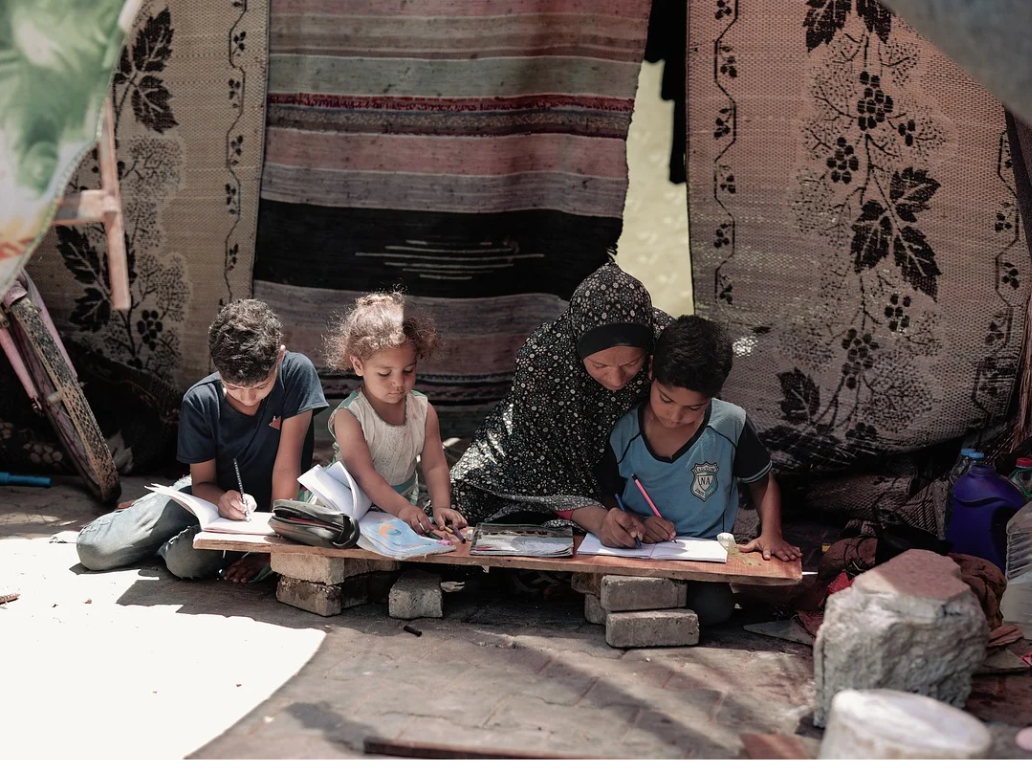
Every day, Khaled Radi sits inside his family’s tent in southern Gaza, trying to prepare for the most important exams of his life. The sweltering heat, constant noise, unreliable internet, and threat of nearby bombardment make concentration a losing battle. Yet the 18-year-old, who dreams of studying medicine abroad, sees little alternative.
“I struggle daily just to pass these exams,” he told +972 Magazine. “A tent is not a suitable place to study. We go to cafes looking for internet access, constantly worried that there could be a bombing at any moment. But taking the exams is better than not taking them at all and wasting years of our lives for nothing.”
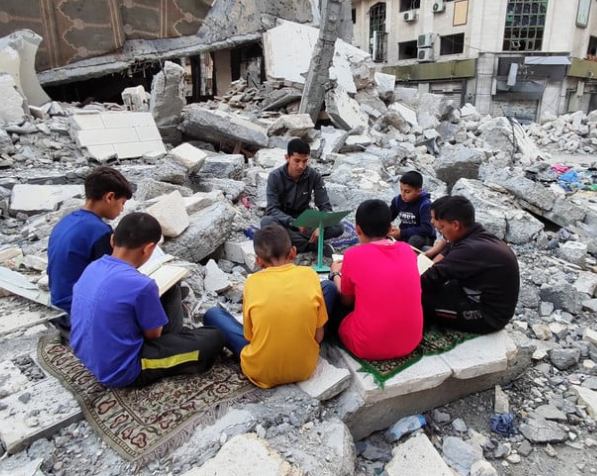
Radi is one of over 37,000 high school students in Gaza currently sitting their final exams, known in Arabic as Tawjihi. For generations, these exams have represented a milestone in the lives of young Palestinians, with students spending months preparing in schools and tutoring centers before applying to universities. But for the third year running, the Tawjihi has been severely disrupted by Israel’s genocide.
The exams, taking place between June 22 and July 3, are being administered online due to the destruction of Gaza’s education system. Approximately 2,000 students who have left Gaza are taking the Tawjihi abroad, while those inside the Strip are attempting to study and sit the exams in near-impossible conditions.
“I watch my son studying in the tent every day with deep sadness,” said Radi’s mother, Rasha. The family was displaced during the war from Abasan, east of Khan Younis, to the coastal dunes of Al-Mawasi.
In order to provide Khaled with some relative quiet during the day, Rasha and her husband take their younger children to their grandfather’s tent. “He doesn’t sleep much in order to finish his studies,” she explained. “He is very nervous because of the internet.”
On the first day of exams, Khaled told his mother, many students couldn’t even log on to the portal before the connection failed, leaving them in a state of extreme stress. “I try to comfort and support him, but I can’t,” she added.
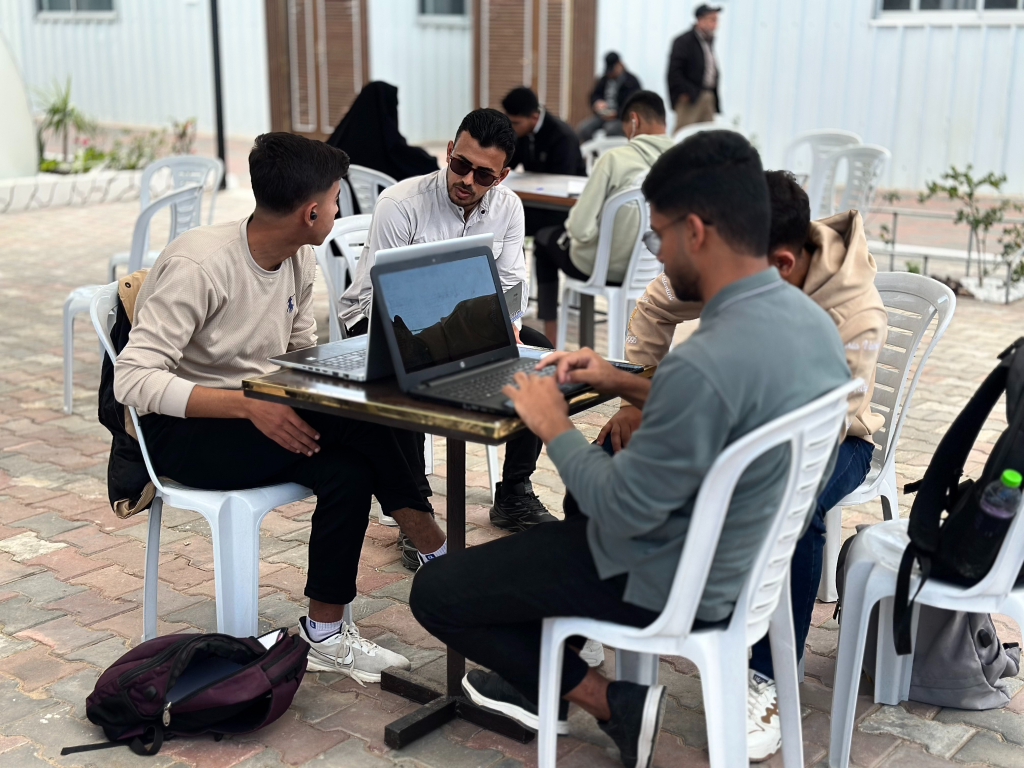
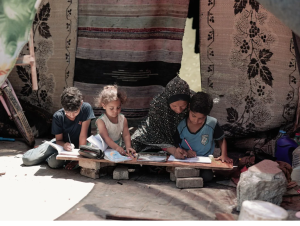
Students at a makeshift university in the Al-Mawasi area of Khan Younis, March 30, 2026. (Doaa Albaz/Activestills)
For teachers, the struggles facing students like Khaled are the product of a decimated education system. Amira Hamad, a 48-year-old Arabic teacher at a private education center in Gaza City, with more than 15 years of experience in both private and public institutions, told +972 that the war has dismantled the intensive support students traditionally enjoyed.
“We used to receive high school students at the centers two months before the start of the academic year to explain the curriculum and give it ample time, as the material is extensive and packed with information,” she explained. “In government schools, there was continuous follow-up, assessment tests to monitor their progress and address their weaknesses, and students were engaged in their studies and kept up with the learning process. Unfortunately, during the war, the teachers and the students lost all of that.”
Now, they are all struggling to adapt to the makeshift conditions. “The center lacks school furniture, has a large number of students, and the tents are very uncomfortable and exhausting,” Hamad continued. “The students cannot tolerate the heat or the cold for long periods.”
The disruption, Hamad explained, is to more than just the physical environment. “During the war, the focus has been on core subjects like Arabic, English, mathematics, and science. Other subjects, such as history, geography, and economics, are not taught.”
Conducting teaching and exams online remains an unreliable and unfair method for most students, she went on. “What does it mean for a student to be forced to take exams via an online link when they are in such harsh conditions? There’s no good internet. Many students have suffered nervous breakdowns during internet outages because the website crashes or their phones suddenly die.”
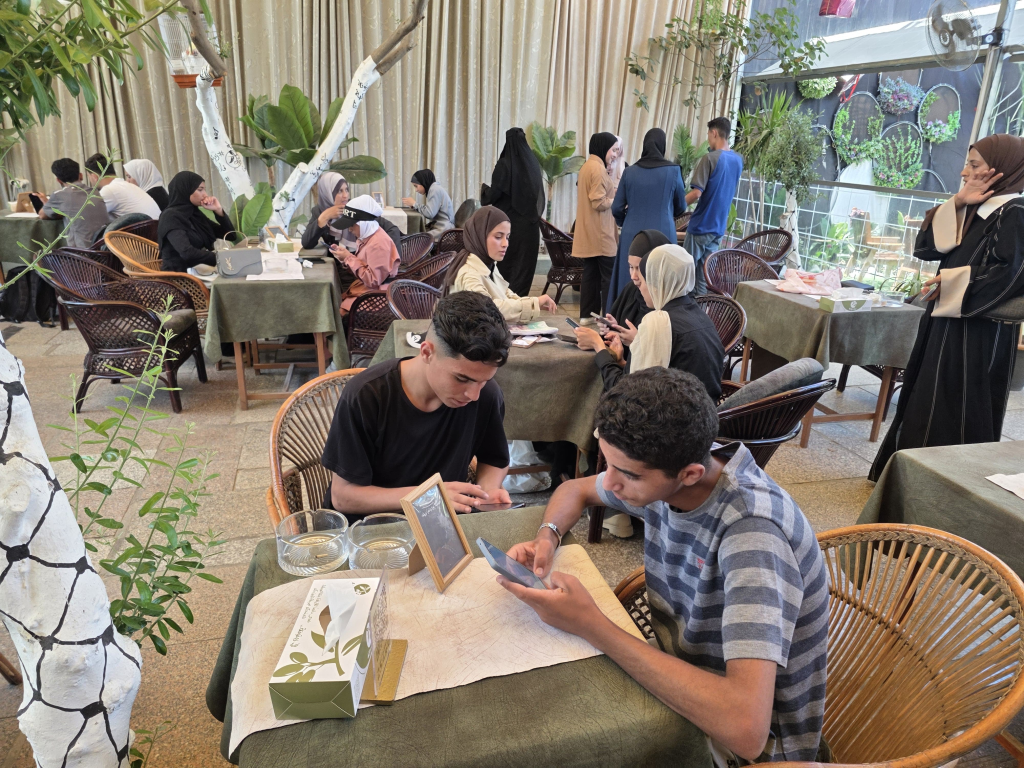
Students at a coffee shop in Deir Al-Balah, in central Gaza, June 20, 2026. (Osama Al-Kahlout)
‘The problems just keep coming’
Joud Rizq, an 18-year-old from Rafah now displaced to Al-Mawasi, had imagined that her final year of school would resemble her older sister’s. Instead, she wakes up at dawn because it is the only time the camp is quiet enough to study.
“My sister Rana was a high school senior a year before the war,” she told +972. “It was like a state of emergency between us — the attention, the quiet, the preparations for her success, the promises of gifts. Those were beautiful moments, like a wedding celebration. But unfortunately, I’ve lost all of that.”
During the day, she said, the noise from the camp makes studying practically impossible. “If a water truck comes, we hear shouting. If there is a problem with the children, there is noise. I wake up at night when people are sleeping. I hope to get high marks and go to university, away from online education, which is the tragedy of education in Gaza.”
Rawan Felfel, also 18 and originally from Gaza City’s Shuja’iyah neighborhood — which is now occupied by the Israeli army — has also spent the year moving from one temporary tutoring center to another after being displaced to Khan Younis. “I started the school year searching for textbooks, then for past summaries, which I found with great difficulty,” she said.
In recent months, Felfel explained, she has moved between five tutoring centers because classes kept stopping or teachers left. “Online learning is difficult and tiring. I miss lessons because the internet is bad or because my phone is dead, especially during the winter.”
The constant bombardment, she added, often makes the matriculation exam seem insignificant. “Every day, there is either gunfire from quadcopters or an airstrike on one of the tents of the displaced,” Felfel said. “Sometimes I am interested in studying and want to get good grades, and sometimes I don’t care and tell myself that the important thing is just to get any result; high grades don’t matter.”
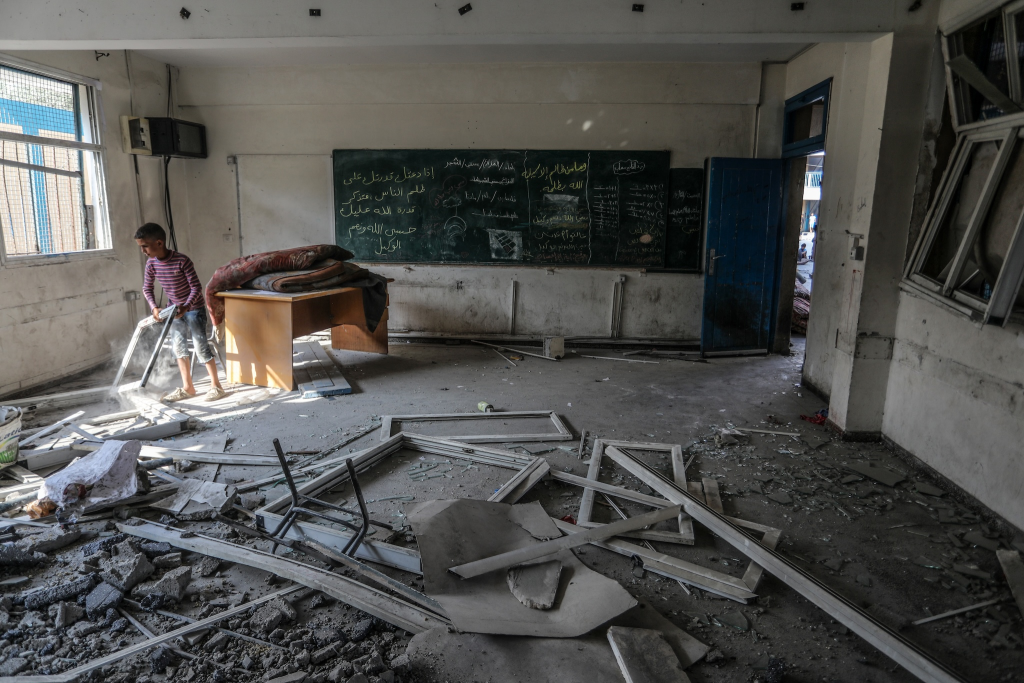
A destroyed classroom at an UNRWA school in the Nuseirat camp in the central Gaza Strip, following an Israeli airstrike, July 15, 2024. (Abed Rahim Khatib/Flash90)
Even when students manage to prepare amid the apocalyptic conditions, they then must contend with the difficulty of sitting the exams online. Before the exam period began, 18-year-old Tala Ajrami from Gaza City searched for a location with stable internet connection to avoid disruptions. “But unfortunately, the problems just keep coming,” she said.
“There are always internet outages, the exam application often malfunctions, and some of us start shouting and crying,” she continued. “I’m sure I’ll lose my temper by the end of the exam period.”
Gaza’s lack of safety despite the ceasefire compounds her anxiety. More than 20,000 Palestinian children have been killed since the beginning of the genocide, including many in recent months.
“We are afraid every time we leave to take an exam,” Ajrami said. “My mother is constantly worried and keeps following up with me until I return home. Luckily for me, I have a house — half of which is destroyed and the other half burned, but it is better than living in a tent with its troubles during the study period.”
Ajrami recalled the tragedy of fellow student, 17-year-old Raghad Hussein Ashour, who was killed in an Israeli airstrike on Gaza City just last week as she was on her way to study at an educational center. Ashour, an 11th grader displaced from the northern city of Beit Hanoun to a tent in Gaza City’s Al-Saraya neighborhood, had excelled in school and had just earned first place in a competitive scholarship program in artificial intelligence.
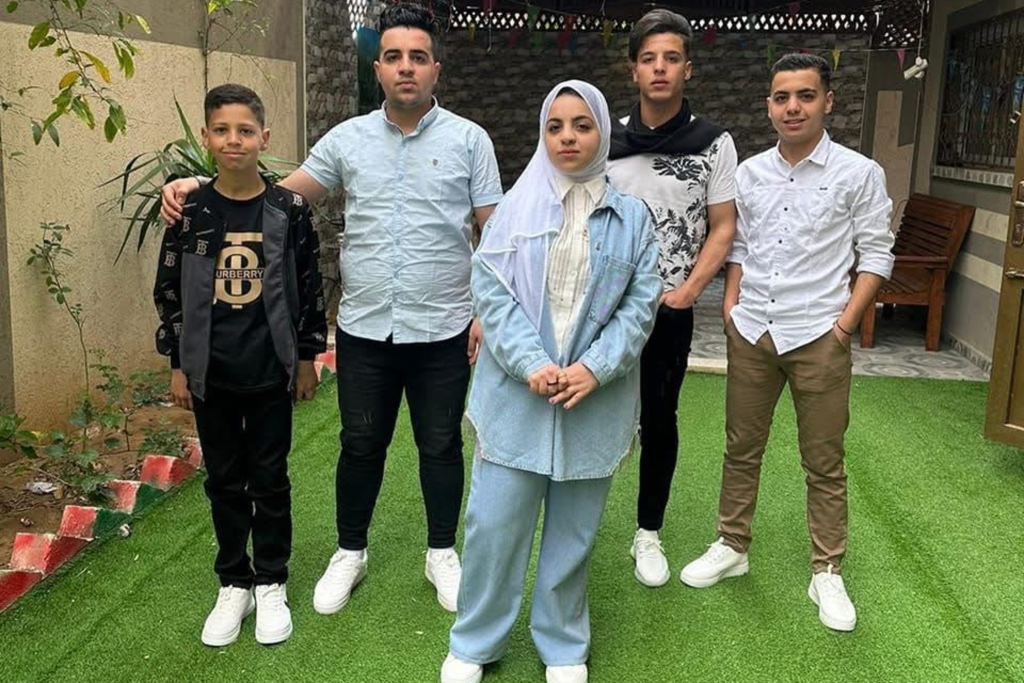
Raghad Hussein Ashour and her brothers, April 2023. (Courtesy of the Ashour family)
“The day before her martyrdom, we were sitting in the tent with her friends, talking and laughing heartily,” her mother, Samiha, said through tears. “Sometimes she would say, ‘I want to become the director of a large educational center or institution,’ and other times she would say, ‘I want to become a doctor like my father.’”
Raghad was raised by her mother alone after her father died of cancer in Egypt when she was just 2 years old, having traveled there for treatment.
On the morning of the strike, Raghad woke up and brought her mother and siblings bread and za’atar. She sat with her mother and drank a cup of tea. After breakfast, she left for the educational center.
“She had only been gone a few minutes when I heard loud explosions,” her mother recalled. “I felt as if a missile had exploded in my heart. What was the sin of this child, who was striving to build her future in an environment devastated by war? She was hopeful and optimistic about life. She never felt bored or discouraged and was always striving.
“She left me and went to meet her father in paradise,” Samiha added. “I will grieve her until my last day.
Ruwaida Amer is a freelance journalist from Khan Younis.