

2 August 2026
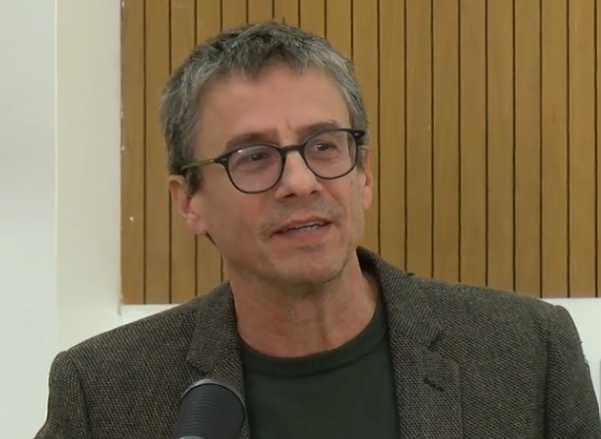
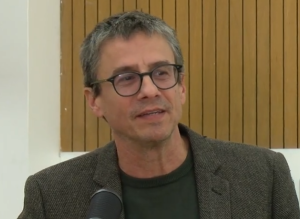
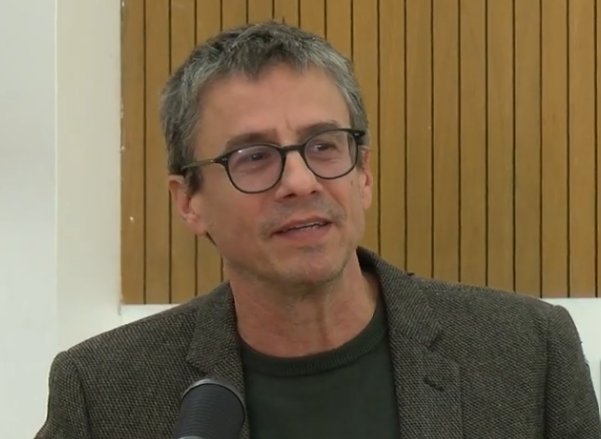
Neve Gordon, an Israeli Professor of Law at Queen Mary University of London (QMUL) explains in this article in Zeteo UK how Zionists seek to delegitimise expressions of support for the Palestine struggle for justice.
Why criminalising the phrase ‘Globalise the Intifada’ is dangerous
Neve Gordon, an Israeli professor of international law, explains the actual meaning of controversial chant and the real reason why there are attempts to outlaw it in the UK, US and Australia.
by Neve Gordon, Zeteo
Wearing a T-shirt with the slogan “Yalla Intifada”, Swedish climate activist Greta Thunberg joined a protest in Berlin’s Wedding district earlier this month. The peace activists marched towards a Rheinmetall facility, protesting its conversion from an automotive-parts plant to one manufacturing parts for artillery shells. Thunberg accused Germany of supporting Israel through continued arms transfers, explaining that “We are doing this because it is our duty to protest against injustice and to stand up against genocide.”
When images of the protest emerged on social media, the Combat Antisemitism Movement complained that the slogan on Thunberg’s shirt, which combines the word for “let’s go” and intifada, invokes “terror campaigns that killed thousands of people”.
But what does the word “intifada” actually mean?
Is it, as the Combat Antisemitism Movement claims, a rallying call to carry out violence against “Jews everywhere”? Or has the pro-Israel lobby ascribed a specific meaning the term in an effort to criminalise protests and speech criticising Israel’s mass displacement, mass killing and mass destruction in Gaza and elsewhere?
Combat Antisemitism are certainly not the only ones to condemn the term intifada antisemitic. During the 2023 and 2024 student encampments in the U.S., the House Committee on Education and the Workforce held a series of hearings with university presidents, essentially accusing them of failing to confront antisemitism on campus Committee members asked presidents specifically about the students’ use of the intifada, claiming it was antisemitic speech. Not long after the Congressional hearing the presidents of UPenn, Harvard and Columbia universities stepped down, attest not only to the success of the U.S. government’s assault on free speech on university campuses, but also to how language can be distorted for political gain.
In the aftermath of the December 2025 Bondi Beach antisemitic massacre in Australia the government in Queensland proscribed the phrase, along with “From the river the sea”, and using it carries a penalty of up to two years in prison. New South Wales is still considering introducing similar legislation, despite it being ruled unconstitutional by NSW’s highest court.
In the UK, also in the wake of the Bondi Beach massacre, the Metropolitan Police issued new guidance for officers which identified the phrase as carrying “a real risk stirring up antisemitism”. Both the Met and Greater Manchester Police announced officers would start arresting people for chanting it at pro-Palestine demonstrations. To date, seven people have been arrested and charged on this basis, including activist Peter Tatchell, who in January 2026 held a placard with the phrase “Globalise the intifada: Nonviolent resistance.” In April, the police dropped the charges against Tatchell, but after the attempted murder of two Jewish people in Golders Green, London, then-Prime Minister Keir Starmer, clearly on the offensive, instructed police to continue prosecuting people chanting “globalise the intifada”, calling it an example of “extreme racism”.
What the experts say
An expert opinion written in late 2025 by Abdul Bashid Shaikh, a lecturer in Islamic Studies, and Mustapha Sheikh, a professor of Islamic Thought and Muslim Society, both from the University of Leeds, clarifies the issue.
The term intifada, which derives from the Arabic root n-f-ḍ, meaning “to shake of rise up,” or “to rid oneself of something burdensome”, entered the global political vocabulary following the eruption of the first Palestinian uprising in December 19Before then, the word had been used in the Arab World to denote different types of protests; Egypt’s 1977 bread riots were called the “Bread Intifada”, for example. As Margaret Litvin, an associate professor of Arabic and comparative literature at Boston University, has explained, the term intifada is “widely and unremarkably used in Arabic texts on the Warsaw Ghetto Uprising” – including in the U.S. Holocaust Memorial Museum’s own Arabic translation of its article on the uprising as late as Novemb2023.
During the first Palestinian uprising, the word was used to denote the population’s struggle to shake off Israel’s military rule and end its occupation of the West Bank, Gaza Strip and East Jerusalem, which at the time was entering its third decade. Characterised largely by mass demonstrations, strikes, boycotts, refusal to pay taxes and different forms of community solidarity and organisation, the First Intifada was widely understood, including by human rights organisations, as a popular grass roots nonviolent revolt against an illegal military occupation.
The authors of the expert opinion acknowledge that the Second Intifada, which erupted after the collapse of the Oslo accords, differed markedly from the first on was characterised by massive Israeli military incursions, targeted killings, and re-occupations of West Bank cities alongside Palestinian suicide bombings, shooting attacks and rocket launches. Within four years, 3,189 Palestinians and 940 Israelis killed.
In my book, Israel’s Occupation, I describe how the highest echelons in the Israeli security establishment had decided to “fan the flames” during the uprising’s first weeks. Amos Malka, who was a military general in charge of intelligence at the time explained that during the intifada’s first month – when the uprising was still most characterised by nonviolent popular demonstrations – the military fired 1.3 million bullets at protesters. The idea was to intensify the levels of violence, thinking that would lead to a swift and decisive military victory and the successful suppression the rebellion.
Human rights organisations documented Israel’s widespread deployment of lethal force against unarmed protesters, while chronicling how Palestinians responded with violence rather than initiating it. Nonetheless, some Western media outlets began associating the term with violence and terrorism, abstracting it from both its broad semantic meaning and the legal and political context of military occupation. But restricted and decontextualised usage was never the dominant way in which the was understood.
On the contrary, outside the Palestinian context, intifada became a popular term descriptively, both in Arabic and English, to refer to other popular forms of resistance including labour protests and anti-authoritarian movements in the Arab world, thus underscoring that the word intifada is not exclusive to Palestine nor in any way tied intrinsically, to armed struggle or violence.
This is not an error. It’s a campaign
In the context of contemporary pro-Palestinian demonstrations in the UK, Abdul Shaikh and Mustapha Sheikh concluded that “there is no evidential basis for treating references to intifada … as encouragement of terrorism or violence. Academic analysis demonstrates that attempts to conflate the term with jihadist violence represent category error that collapses distinct political, historical and ideological phenomena.
While it is undoubtedly an error to conflate intifada with terrorism and antisemitism there is no error in how pro-Israeli politicians and organisations wilfully equate the term with calls for violence against Jews. Indeed, this reading of the word intifada purposively introduced to criminalise lawful resistance to Israeli colonialism and genocide and is part of a broader campaign targeting phrases such as “from the to the sea” and “anti-Zionism”, and even badges and zoom backgrounds depicting watermelons.
The pro-Israel lobby clearly – and rightly – understands that language is one of the most potent and effective vehicles for bringing about political change. They also see the chasm that has opened between public opinion and the political and financial elites on the question of Palestine, where the latter groups no longer control the common sense. And this is why different lobbying groups and politicians have been intent on criminalising the slogans and symbols used to rally mass support of Palestinian liberation. Language has become a site of struggle where certain forces attempt to hijack the meaning of key terms and phrases to advance their own political objectives. If we care about the meaning of words, we must be vigilant about protecting our language from lobbying groups and insist on our ability to use the words in the public arena.
So, Yalla Intifada.
Neve Gordon is a professor in the school of law at Queen Mary University of London and a Fellow of the British Academy of Social Sciences. His most recent co-authored book is The Gaza Tribunal: Britain’s Complicity in Genocide (2026).