11 November 2026
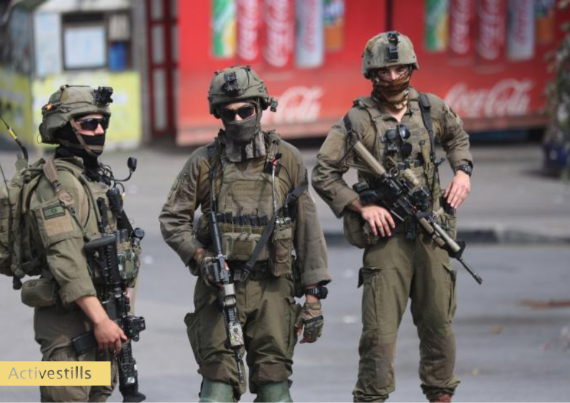
This report by Amira Haas of Haaretz of the IDF assault on Professor Dirar Aliyan, President of the Nablus University for Vocation and Technical Education, offers yet further evidence of the Nazi-style behaviour of the IDF towards the Palestinians of the Occupied Palestine Territory. (Cover photo by Mosab Shawer courtesy ActiveStills)
Palestinian University President Says He Was Beaten During IDF Raid in West Bank
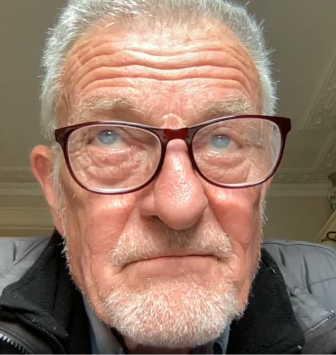
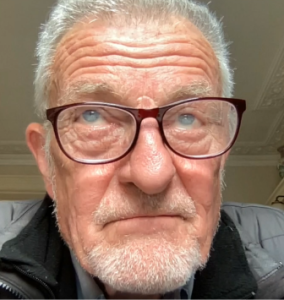
Dirar Aliyan, 59, a prominent Palestinian professor and
U.K. citizen, says IDF troops first raided his apartment and
beat him while searching for a wanted nephew, despite
knowing that the latter lived on the floor aboveGift this
article
November 10, 2026
Dirar Aliyan, 59, awoke in the middle of Wednesday night to blows to his chest and neck. It was well past midnight. The room was dark, and he was alone in the apartment, connected to the ventilation machine he uses while sleeping. Thinking he was having a nightmare, he reached for the light switch, but was struck again.
“I want to know who you are. Turn on the light,” he said. One of the men assaulting him asked where the switch was. “By the door,” replied Aliyan, the president of Nablus University for Vocational and Technical Education, a Palestinian institution specializing in nursing, midwifery and medical physics.
– Advertisement –
When the room lit up, all he saw were eyes, IDF uniforms and weapons. He estimated there were five soldiers present, all masked. Aliyan believes that the man who spoke to him in excellent Arabic was a Shin Bet security service agent, but to the best of his recollection, this was not explicitly stated.
Aliyan’s home is known to the IDF, and Wednesday’s raid marked the second time in five weeks that soldiers had raided the family building in the West Bank village of Deir al-Ghusun, north of Tulkarm.
– Advertisement –
The soldiers should have known that Aliyan’s apartment is on the lower floor, while his brother’s apartment is upstairs. The brother’s son is wanted by the army.
In the first raid, on September 30, the troops arrived early in the morning. No one was in Aliyan’s apartment, as his permanent residence is Ramallah, and he visits his home village only occasionally.
– Advertisement –
Aliyan also frequently travels to the United Kingdom, where his wife teaches cybersecurity and network services at a university, and where his children live and study. All of them hold British citizenship, in addition to Palestinian.
During the first raid, the soldiers searched the empty apartment, leaving behind open drawers and cabinets with their contents emptied. The sight shook Aliyan.
In the apartment upstairs, only his brother’s wife and one of his two nephews were present. The soldiers asked them about the other brother, who had already left for university, but left no summons for questioning by the police or the Shin Bet.
When soldiers raided his apartment overnight last week, Aliyan did not hear them enter because the air conditioning and the ventilation machine that helps him breathe were running. Still dazed by the violent awakening and the soldiers’ intrusion into his bedroom, he was asked by an officer where his family was.
Aliyan replied that they were in England. He noticed that the soldiers had not asked his name or requested his identification card. The officer then asked for his children’s names, which Aliyan provided. When he asked the officer for his name, however, the latter did not respond, asking instead whether Aliyan held a British passport.
“I told him I have a Palestinian diplomatic passport – a university president holds ministerial rank – as well as a British one,” Aliyan told Haaretz.
The officer photographed his British passport and went into the next room, where Aliyan heard him speaking on the phone for about 15 minutes.
When the officer returned, Aliyan told him he felt unwell and needed to be taken to a hospital. The officer replied that it was not his concern and that he would call an ambulance.
However, with soldiers still deployed in the village, an ambulance from Tulkarm would have had to coordinate its arrival through the Ad Hoc Liaison Committee, which handles humanitarian coordination for Palestinians and requires army approval.
Because obtaining that approval would take time, another nephew – the son of a different brother – drove Aliyan to the hospital. Medical examinations carried out in the hospital found bruising and pain but no cracks or fractures. Meanwhile, the soldiers went upstairs to the apartment above and arrested his brother’s son.
Five days after the raid, Aliyan says he still feels chest pain when he coughs, but the emotional trauma has been more painful than the physical wounds.
“If you’re looking for someone, ask where he is. Why resort to blows? Nothing justifies this,” he said.
A statement by the IDF said that overnight into November 5, troops operated in the village “following intelligence about the presence of a wanted individual in one of the buildings.”
“The forces entered the building where the wanted individual was suspected to be present and questioned his associate, Professor Dirar Aliyan, to locate the suspect. We found no evidence of any violence by the soldiers.
“Contrary to the claims, the forces asked [Aliyan] to present the relevant documents, which showed that he is a relative of the wanted individual but not involved in any wrongdoing.”
Testimonies of physical violence by soldiers regularly feature in reports received by the Human Rights Defenders Fund, which monitors Palestinian detentions and arrests daily.
In the absence of photographic evidence, the IDF Spokesperson’s Unit regularly tells Haaretz that “it has found no evidence” of violence. According to daily data compiled by the PLO’s Negotiations Department, the IDF carried out 42 raids on villages, neighborhoods and homes in the 24 hours between November 4 and 5.