



13 August 2026
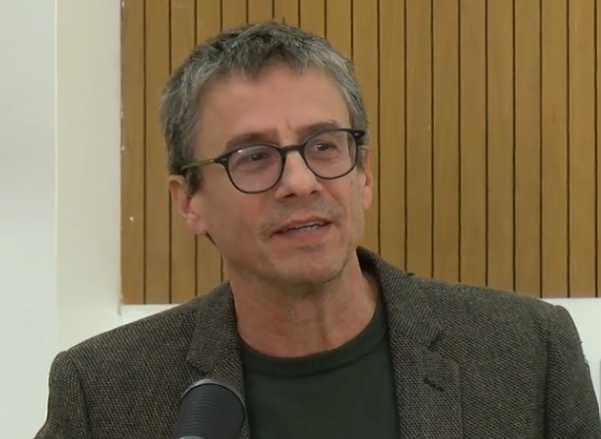
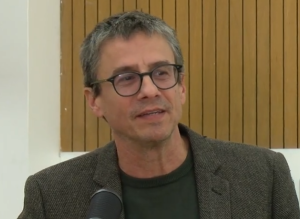
This powerful essay by Sophie Lewis (pictured) offers a brilliant analysis of Israel’s fictional claims of Hamas’ sexual abuse on 7 October 2023 and its actual sexual abuse of Palestinian prisoners, locating them both within a compelling framework of analysis.
This is what it looks like when a society has settled the question of who counts as rapeable – which is to say, who counts as human.
It also makes clear who has protection from sexual violence under the law and who has the government backing to commit it.
The obsessive framing of Palestinian men as rape-obsessed monsters is designed to shield Israel from criticism, and to distract from the barely hidden, monumental scale of Israeli sexual brutality
—Sophie Lewis; Independent Feminist Writer
“Everything Is Legitimate”: How Israel Uses Rape as a Tool of Genocide
The rape of Palestinian detainees is so commonplace that it’s no longer hidden. It’s filmed, joked about, and celebrated in parliament. This is no mistake; it’s core to Israel’s colonial project.
Jul 30, 2026
In July 2024, a surveillance video leaked out of a military facility in the Negev desert – then, it persistently eluded Israel’s attempts to suppress it. The footage appeared to show a group of masked Israeli military reservists gang-raping a Palestinian detainee under the cover of riot shields at Sde Teiman, a makeshift detention camp that has elicited growing horror from human rights organizations and onlookers since the start of the genocide.
The victim was hospitalized with a ruptured bowel, broken ribs, and lung damage. Military police arrested nine soldiers in connection to the attack on July 29.
Sde Teiman is an army base in an arid expanse about half an hour’s drive from the Gaza perimeter. After October 7, 2023, it was quickly converted into a detention facility for Palestinians from Gaza abducted by Israeli forces. What it promptly became – documented through survivor testimony, medical reports, and the findings of multiple human rights investigations – is a torture facility rife with sexual abuse. Not only are detainees held for days in stress positions, blindfolded and shackled, denied food, water, hygiene, and medical attention, but they are also raped.
What followed the arrests of the reservists caught in the video was a spectacle without precedent even in the recent record of Israeli impunity. A mob of far-right nationalists, including sitting members of the Knesset and government ministers, stormed first the Sde Teiman base itself to free the soldiers, then the Beit Lid army base 37 miles away, where they had been transferred for questioning. Itamar Ben-Gvir, the national security minister, condemned the arrests and called the men “our best heroes.”
Finance Minister Bezalel Smotrich released a video defending them. On the floor of the Knesset, Likud lawmaker Hanoch Milwidsky was asked by his Arab colleague Ahmad Tibi whether it was legitimate to insert a stick into a prisoner’s rectum. “Yes!” Milwidsky shouted back. “If he is a Nukhba [Hamas operative], everything is legitimate. Everything!”
The mob did not succeed in releasing the accused rapists instantly, but several were let out by military courts within days. By February 2025, the five reservists who remained in custody were charged with “severe abuse” rather than rape.
The video prompted condemnations from the United Nations and the State Department, which both called for a “full-scale” investigation of Israeli detention centers; the 1997 Leahy Laws prohibit U.S. aid to any foreign military forces guilty of “gross violations of human rights,” but despite an investigation, as well as innumerable other abuses by Israeli forces in Palestine, they have not been enforced.
Recently, the Israeli military dropped charges against the five soldiers, a decision lauded by Israeli government officials, including Prime Minister Benjamin Netanyahu, who called the men “heroic warriors,” and Defense Minister Israel Katz, who said the military’s judicial system’s role is not to offer accountability but instead to “protect and safeguard” soldiers. Apparently, the great crime in this episode was not the alleged sexual torture, but the fact that it was leaked.
How should we understand this? Not just the rape itself, which armies have committed everywhere, but the celebration of it? Mainstream feminist discourse has had a term since the 1970s for societies in which sexual violence is normalized in language, permitted in everyday life, rationalized in law, and institutionally protected: rape culture.
The term is not wrong here. But it is not sufficient, either, because it was built to describe a patriarchy preying on its own women, and what stood revealed at Sde Teiman has a different architecture.
In recent decades, anticolonial, indigenous, and revolutionary feminists – Rabab Abdulhadi, Sahar Francis, Revital Madar, Randa Abdel-Fattah, and Alison Phipps, among others – have transformed the concept, showing that in settler-colonial contexts, sexual violence is not a cultural residue but a governmental multi-tool.
In Zionist settler colonialism specifically, raping the precarious indigenous population does several material things at once. It invades and occupies corporeal territory. It terrorizes, and thereby disciplines, the underemployed Palestinian workforce. And even as it forces contact, it distances: it “others” its victims, inscribing the native-settler line on the body itself.
As the Palestinian feminist scholars Nadera Shalhoub-Kevorkian, Sarah Ihmoud and Suhad Dahir-Nashif have argued: “The logic of sexual violence attempts to fragment Palestinian family and communal life, as it severs the connection to the Palestinian homeland. The Zionist project is inherently based on the destruction of Palestinian native bodies and land, which cannot be separated from the colonial logic of elimination.”
One measure of why the standard framework of “rape culture” fails: Much of this violence is nowadays carried out by women. Testifying in Geneva in 2025, the Palestinian feminist organizer Kifaya Khraim stated that “rape was mainly done by Israeli female officers inserting objects inside genitals.”
A patriarchy-only account of sexual violence cannot metabolize this fact. An account of sexual violence as a technology of colonial rule absorbs it easily – which by no means precludes us from understanding these machineries, staffed by women as they often are, as themselves inextricable from patriarchal domination.
Nor is any of this an invention of the post-October 7 reality. Rape was used as a military tactic during the Nakba, as scholars such as Nadera Shalhoub-Kevorkian and Ronit Lentin have amply documented. The Israeli historian Benny Morris found “many cases of rape” by Haganah paramilitaries, in the archive of 1948–1949 – and professed himself “surprised” by them.
What could possibly make it surprising to a trained historian that armed settlers did what armed settlers have done everywhere in the world? The surprise is itself part of the apparatus: The finding must be registered as an anomaly, because to register it as a pattern would be to concede what the pattern means.
The pattern has never broken. In 2015 – nearly a decade before the current wave of the genocide – a study analyzing cases of prison abuse collected by the Public Committee Against Torture in Israel concluded, in a peer-reviewed journal, that “sexual ill-treatment is systemic.”
A 2026 medical paper on 517 male Palestinian detainees echoes the study’s finding that one of the effects of raping men (specifically) is often a “vicarious” torture inflicted upon them and their families members via the humiliation of Palestinian masculinity, the symbolic shattering of its honor, and the feminizing of male bodies.
Dr. Adnan Al-Bursh was a surgeon and a figure of avuncular Palestinian authority who spent his career repairing broken bodies as head of orthopedics at Al-Shifa Hospital in Gaza. He was arrested by Israeli forces in December 2023 and was killed in Ofer Prison just over four months later, at the age of 50. Survivors detained alongside him reported that he was repeatedly raped.
A U.N. human rights official, Tlaleng Mofokeng, confirmed that his death was consistent with torture; Francesca Albanese, the special rapporteur on the Occupied Palestinian Territories, concluded he was “likely raped to death.”
To date, Israeli police have not charged anyone with killing him and his wife is still fighting to recover his body. No international body that amplified the unverified claims of Hamas sexual violence rushed to hold a press conference about Dr. Al-Bursh. As the scholar Maya Mikdashi once pointedly asked: Can Palestinian men be victims?
Sexual violence, moreover, boomerangs back into settler society – as colonial fascisms are wont to do – taking on a banal ubiquity within and among Israeli communities. Complaints of sexual harassment within the Israeli army have long been high and have lately risen higher. Domestically, an estimated 230 sexual assaults take place per day in Israel – 10% above the average for countries in the Organization for Economic Co-operation and Development (OECD) – with a shockingly low relative rate of indictment.
Ha’aretz reported in 2011 that 61% of Israeli men do not regard forced sex with an acquaintance as rape, a view shared by 41% of Israeli women, according to that report. When the gang rape of a 16-year-old girl by as many as 14 boys and men in Eilat forced a national reckoning in 2020 – Israel National News itself pointed to a newly emergent “rape culture” among the nation’s youth – the introspection lasted barely a season. Permissive callousness with regard to rape in the context of occupation leeches back into domestic conduct, coloring Israelis’ treatment of their “own.”
Five years after Eilat, a poll by an Israeli think tank found that a majority of all Israelis oppose criminal investigations into soldiers accused of abusing Palestinian detainees. A writer for the newspaper Israel Hayom argued on a TV news broadcast that the “only problem” with the Sde Teiman allegation was that it was “not standard state policy,” because “in general they deserve it, and this is great revenge.”
(He retracted the comments the next day, following criticism.) Crowds outside the Supreme Court chanted “we love you” at men who do not deny – much less regret – that they allegedly raped a prisoner to the point of organ rupture; some of the accused have since become minor television celebrities.
This is what it looks like when a society has settled the question of who counts as rapeable – which is to say, who counts as human. It also makes clear who has protection from sexual violence under the law and who has the government backing to commit it.
Sexual violence, in other words, is not incidental to the colonial project. It is its grammar.
If the grammar is old, its current conjugation is more intensive and more diversified. The 2025 report of the U.N. Commission of Inquiry on the Occupied Palestinian Territory – “‘More Than A Human Can Bear’: Israel’s Systematic Use of Sexual, Reproductive and other Forms of Gender-Based Violence since October 2023” found that forced public stripping, threats of rape, and sexual assault – that is to say, torture – constitute standard operating procedure, perpetrated under explicit orders and/or with the implicit encouragement of officials at the highest political levels.
NGOs such as Al-Haq and Al Mezan corroborated these findings in late 2025 with U.N. submissions containing victim testimonies from inside Israel Prison Service facilities. A 2026 report by B’Tselem, “Living Hell: The Israeli Prison System as a Network of Torture Camps,” built on its 2024 predecessor, “Welcome to Hell.”
The latter had exposed both the genitally-targeted violence of the IPS and the brutality of the “Keter,” a masked unit deployed against incarcerated populations at Ofer and the Negev prisons. The reports reveal “a grave pattern of sexual violence,” based on testimonies from Palestinians freshly transferred from IPS facilities, who reported injuries consistent with anal assault and prolonged genital trauma. These are not aberrations. They are a system – recorded and cross-corroborated by the very organizations Israel’s defenders routinely cite when it suits them.
The escalation has produced practices that would strain belief were they not multiply substantiated. Trained attack dogs, imported from Europe to maim and kill Palestinians, have been in use for some time; in the summer of 2024, reports began to emerge that rape was among the acts Israeli military dogs were made to commit. The lawyer Fadi Saif al-Din Bakr and the TV correspondent Mohammed Arab both gave eye-witness accounts of this from Sde Teiman.
In April 2026, the Euro-Med Human Rights Monitor published first-person testimonies of the practice in its report “Another Genocide Behind Walls.” The following month, the New York Times columnist Nicholas Kristof caused a geopolitical scandal – and drew accusations of blood libel from Netanyahu himself – simply by reporting these long-established facts.
“Peer-reviewed medical literature documents rectal injuries caused by canine penetration,” Kristof protested, in a Q&A staged amid the meltdown. Under intense fire for publishing Kristof’s piece, the Times’s executive editor, Joe Kahn, stressed publicly that the work was an opinion piece (i.e., one not fact-checked in the newsroom), and one that he “probably wouldn’t have” published himself.
Nor is sexual violence confined to prisons. The West Bank – where everyday settler terror has recently accelerated via more land confiscations, settlement expansions, territorial annexations, and restrictions on local movement – is another major site of Zionism’s use of rape.
The Norwegian Refugee Council-led West Bank Protection Consortium recently interviewed displaced Palestinians and found that more than 70% named the threat of sexualized violence from settlers and allied armed forces as their decisive reason for abandoning their homes. Its April report, “Sexual Violence and Forcible Transfer in the West Bank,” documents men and boys stripped, groped, and urinated on in front of their families; women and girls threatened and degraded by gesture and lewd touch; Israeli soldiers participating, or standing by.
“Settler behavior is becoming increasingly sexualized,” one journalist observes in its pages.
Over a decade ago, Sarah Ihmoud noted that “a feminization of the colonized man, or pathologization of his sexuality” was central to the “personification of the Palestinian collective as a single rape-able woman.” And it is now the sexuality of men and women alike in the sights of those who, for instance, zip-tied the genitals of the shepherd Qusai Abu al-Kebash before parading him through his village.
Much of the escalation no longer requires secrecy – it is photographed, filmed, and disseminated by its own perpetrators, turning the thousands of members of Israeli society who daily consume and share the footage into co-participants in the attempted destruction of Palestinian personhood.
Al-Jazeera relates how a 17-year-old, Ahmed, was filmed, groped, and forced to verbally degrade himself by eight “fully naked” female soldiers; Kristof records a female guard grabbing the genitals of the journalist Sami Al-Sai, joking “These are mine,” and squeezing until he screamed.
Even scriptural sanction has been aired: in 2016, the head of the military rabbinate came under fire for remarks he’d written as a rabbi prior to taking military office, locating an allowance for soldiers to rape the enemy – to indulge “the evil impulse” in the name of victory for “Judea.” A system that films itself, jokes about itself, and defends itself on the floor of parliament has moved past denial into avowal. What it cannot tolerate is not exposure but accountability.
It was a figure deeply embedded in the war effort – often described as a trailblazer for women – who authorized the leak of the Sde Teiman footage: Yifat Tomer-Yerushalmi, a major-general who served as the army’s top lawyer, and who subsequently filed the criminal charges against five of the reservists shown in the video.
Her aim, by her own account, was to protect the image of the Israeli military – “the vast majority of our law-abiding soldiers” – by isolating “the few who violate regulations.” It was, in this telling, a matter of punishing a few bad apples, a preventative public relations exercise. For this, she was ousted in October 2025, summarily replaced as military advocate-general, dismissed from the army in disgrace with loss of pension, placed under house arrest, and criminally prosecuted.
A characteristic piece in JNS baselessly called the video “a fabrication” and its leaking an act “of grave naiveté” that “destroyed lives” and “wounded Israel’s moral shield.” When, in November, the reviled leaker briefly went missing near a beach, leaving what seemed to be a suicide note, and was then found alive within hours, the TV personality Yinon Magal tweeted in Hebrew: “We can proceed with the lynching 😉.”
The Tomer-Yerushalmi affair is not a pressing cause for sympathy with the dishonorably discharged. But it lays bare the narrative apparatus with unusual neatness, illustrating not only who can be a victim – recall Mikdashi’s question – but who can be believed. Palestinian testimony and proof of crimes against Palestinians have been available in abundance for the best part of a century; this has never troubled Israel.
The problem was that a prestigious figure inside the military was saying that the rape of a “Nukhba” might still be rape – that there are “actions which must never be taken even against the vilest of detainees.” Rape, after all, is a thing a “civilizing” enterprise, a democracy, must abhor.
The contradiction – brandishing rape on the global stage as the signature crime of Palestinian men against Israeli women while legitimating it in parliament as a weapon against Palestinians – cannot be highlighted, especially not ostentatiously. It became a problem only when someone in high-ranking uniform tried to redress it a tiny bit.
To understand how the contradiction is ordinarily managed, we have to go back to October 2023 and the media machinery that manufactured the moral emergency. Claims that Hamas militants used mass rape as strategy during the October 7 attacks spread before any serious verification had taken place, then migrated with extraordinary speed into the highest levels of Western diplomacy. Secretary of State Antony Blinken aired the mass rape allegations at the United Nations Security Council.
President Biden told Jewish community leaders he had also seen photographs of “terrorists beheading babies” – a claim never substantiated, and one his own administration walked back. These were not idle remarks but justifications for collective punishment, proffered by the leaders of the country supplying the bombs.
Those unverified and contested tales of systemic atrocities, including sexual violence, laundered through a credulous press and trumpeted by the most powerful government on earth, became the emotional scaffolding for a putatively feminist genocide.
In December 2023, the New York Times published “Screams Without Words,” the supposedly definitive account of systematic Hamas sexual violence. Gaping holes were quickly exposed: The Intercept reported that the Times’s flagship podcast shelved a planned episode after the piece failed internal fact-checking; key claims were contradicted by the Times’s own subsequent reporting; the family of the main survivor said they had been misled about the article’s angle.
The Times has stood by the story without addressing the discrepancies. Unproven allegations hardened into justifications – because the case for annihilating Gaza never actually rested on the quantity or quality of evidence, but on the colonial monopoly on credibility: Israel’s structural advantage in the contest over whose testimony the world will dignify with belief.
Hence the coining of “me too, unless you’re a Jew” (#MeTooUnlessYoureAJew) as a rebuke to anyone asking evidentiary questions; hence the activists appearing beside campus encampments chanting “rape is not resistance,” reframing the movement for Palestinian liberation, in the span of weeks, as a rape-endorsing hate movement.
The projection persists. On the day I began drafting this essay, the Israeli author Tamar Raphael was facing a deluge of rape threats for calling the genocide in Gaza a genocide at the Frankfurt Book Fair, while defenders of that genocide posted detailed rape wishes against the actor Hannah Einbinder and the activist Greta Thunberg – the same Thunberg whom Israeli soldiers actually stripped and abused when she joined the Global Sumud Flotilla.
Eight months later, as I check the news again, I find myself confronted with the following headlines: “11 Harrowing Video Testimonies From Westerners Tortured and Raped by Israel”; “‘They want to break our will’: Gaza flotilla activist tells of rape in Israeli detention.”
The obsessive framing of Palestinian men as rape-obsessed monsters is designed to shield Israel from criticism, and to distract from the barely hidden, monumental scale of Israeli sexual brutality – which does not pause while the narrative is being managed. These threats are not only the ambient misogyny of public life; they also carry geopolitical freight, expressions of a tradition in which rape functions as territorial assertion.
There is one more clause in the grammar, and it is the oldest: reproductive purity. Rape in the settler colony runs on a eugenic logic that polices the racial boundary from both sides – violating the native body while guarding the settler body against contamination.
One reality that emerges from the archives of the Haganah in British Mandatory Palestine is that the colony had, from before the state existed, an official culture of eugenicist terror comparable to that of the U.S. South with its myth of the black rapist.
In 1920s Tel Aviv, Jewish women who partnered with Arab men were surveilled, denounced, and tortured by paramilitary policemen – hot pepper poured into their vaginas as a matter of official “purity” enforcement – while their lovers risked being attacked. The body of the Jewish woman who crossed the racial line was not a private scandal but a national problem.
When, this month, the Palestinian Feminist Collective and Progressive International released A Predatory State – a report devoted to the use of sexual violence against Palestinians – the demographic, reproductive aims of rape emerged yet again as central to the Israeli national project.
A Predatory State contextualizes its findings by quoting the Israeli geographer Arnon Soffer’s 1995 warning that Palestinian births fundamentally endanger the colony’s national security: “the most serious threat Israel faces is the wombs of Arab women.” The authors conclude that today, “Israeli sexualized violence is a central method of political, psychological, and physical warfare” in imagined self-defense against this so-called threat.
It is, as they go on to say, “intentionally deployed to cause mass bodily and mental harm and injury” in such a way as “to destroy the Palestinian people in whole or in part and therefore must be regarded as a genocidal act.” Rape and genital mutilation, by attacking people’s futures, are pillars of what the Palestinian Feminist Collective has termed reproductive genocide.
In a context where Palestinians have smuggled sperm out of prisons for the purpose of pursuing assisted reproduction in defiance of Israel, “reproductive organs are targeted with genocidal intent,” according to PFC member Tara Al-Alami. Indeed, “Palestinian futurity” itself, notes the report, “is fundamentally incompatible with Israeli settler-colonial elimination.”
Already in 1961, observing the aftermath of the Shoah, Hannah Arendt uncomfortably registered the resonance between the Nuremberg Laws’ prohibition on intermarriage and Israeli society’s phobia of “race mixing.” Six decades on, the phobia is statute. In July 2023, the Knesset passed a law allowing harsher punishment of sexual assaults committed with “nationalistic motivations” – supposedly to address the threat posed by Arab men.
But as Rachel Stomel, a spokesperson for the Center for Women’s Justice, told Jewish Currents: “this law does not see sexual violence as wrong because it’s a violation of women’s safety, autonomy, or personhood,” but because of the “impurity” of miscegenation.
Meanwhile, Middle East Eye reports an uptick in Jewish attacks on Palestinian men in Jerusalem and elsewhere “based on mere suspicion that they were dating or seeking to date Jewish women” – Tel Aviv in the ‘20s, returned.
What connects these threads is not aberration but continuity: Rape and its policing draw the same line, marking which bodies are territory and which are treasure – who may be entered and who must be sealed.
It is this eugenic clause that the country’s comedians understand best.
“They say the Israeli army is a moral army because unlike other armies, we don’t rape the women we’ve conquered, and this is true,” pitches the stand-up comic Elad David, in a set approvingly quoted in Forward. Then the pay-off: “But honestly, have you taken a good look at who we’ve conquered? Now, send us to war against Sweden…!”
Here is an idiosyncratic twist on settler-colonial racism. The settler disgustedly disavows any desire to touch the native population – while resting his joke, literally, on a confession of the desire to rape, displaced onto the archetypal Swede.
On one hand, the Palestinians are beneath rapeability: ugly enough to inspire (ha!) accidental morality in the Israeli military. On the other, the fantasy of raping a white woman is played as a bid for the whiteness the comedian fears he lacks. Israeli stand-up is rife with such gleeful, knowing celebrations of sexualized torture.
Consider the military veteran Guy Hochman’s recent riff on how inconvenient it is to be “the guy with the iPhone that was inserted into a Nukhba detainee’s butt,” complete with a mocking impression of the one effete member of the squadron who merely films it all while murmuring, “It’s not nice what you’re doing guys, it’s not okay.”
Rape-as-open-secret and Israeli-men-don’t-rape look like a flat self-contradiction. It works, somehow – not least because the people being most openly raped aren’t human enough, in this imaginary, for their violation to “count” as rape for the rapists. It doesn’t confer what raping a Swede would confer.
This is the throughline of a political project that requires the Palestinian body to serve simultaneously as an object of domination and as proof of the dominator’s power. Sexual violence in this context is constitutive of the soldier’s identity, of the nation’s mythology, of the border between the human and the sub-human that colonial projects must constantly re-inscribe.
To name this clearly is not to reduce Palestinians to their suffering. It is to insist that what is being done to them is real, that it is a matter of policy and not pathology, and that no volume of manufactured counter-narrative – no hashtag, no congressional testimony, no shelved podcast episode – can make it disappear.