


21 June 2026
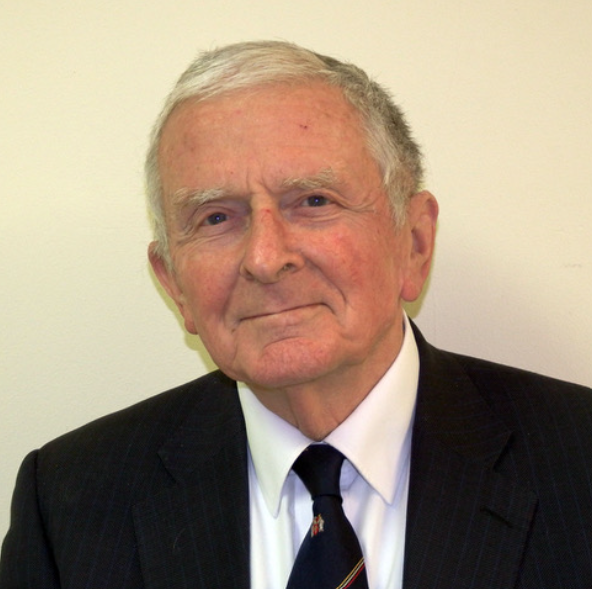
Professor Colin James Green (1935–2026)
Professor Colin James Green, pioneering medical scientist and tireless advocate for global health and human rights. His career spanned continents and disciplines, from the laboratories of Britain’s leading research institutions to hospitals and classrooms in some of the world’s most challenging environments. He combined scientific innovation with a deep moral commitment to improving lives, particularly in communities affected by conflict and deprivation.
Born in Portsmouth in 1935 into a Royal Navy family, Colin was educated at the Britannia Royal Naval College, Dartmouth, which he entered on a full scholarship. He served in the Royal Navy between 1952 and 1956, initially intending to pursue a career in the Fleet Air Arm. However, his resignation over the Suez Campaign marked an early indication of the independence of mind and ethical conviction that would define his life.
He went on to study veterinary medicine at the University of London, qualifying in 1963, and spent several years working in agriculture before turning to medical research. In 1969 he joined the Medical Research Council, where he began a distinguished scientific career focused on organ transplantation, cold preservation and immunology, combined with surgical innovation. At the National Institute for Medical Research (Mill Hill) and later at the Clinical Research Centre at Northwick Park, he helped develop novel microsurgical techniques and contributed to advances in organ perfusion and preservation.
Colin was among the early pioneers working on cyclosporine A, the immunosuppressive drug that transformed transplant medicine by dramatically reducing organ rejection. His research earned him a PhD in 1975 and later a Doctor of Science degree. He became Head of Surgical Research at the Clinical Research Centre in 1979 and was elected a Fellow of both the Royal College of Pathologists and the Royal College of Surgeons of England (honorary).
In 1996 he was appointed to a personal chair in Surgical Science at University College London, and in 1998 he was named UNESCO Chair in Cryobiology and elected an Academician of the Ukrainian National Academy of Sciences based in Kharkiv. Over the course of his career, he authored more than 500 scientific publications, with later research focusing on tissue regeneration, stem-cell technologies, burns treatment and the therapeutic potential of carbon monoxide-releasing molecules.
Alongside his academic work, Colin was a prolific institution builder. He played a central role in establishing the Restoration of Appearance and Function Trust (RAFT) and later directed the McIndoe Centre for Surgical Research in East Grinstead. In 1994 he founded the Northwick Park Institute for Medical Research, now the Griffin Institute, which continues to advance translational medicine.
His commitment to practical humanitarian work was equally significant. As a consultant to charities working in Russia during the 1990s, he helped establish a modern burns unit in a Moscow paediatric hospital. In 2000 he founded the International Medical Education Trust (IMET2000), which developed training, research and telemedicine programmes across Eastern Europe, the Middle East, Asia and Africa. Among its achievements were the creation of a health sciences research centre in Ramallah and the development of a rural hospital and eye clinic in Uganda.
Colin’s engagement with Palestine was particularly enduring. He helped revitalise Medical Aid for Palestinians in the 1980s and played a key role in the establishment of the first Palestinian Faculty of Medicine at Al-Quds University in 1994, where he remained a visiting professor. In recognition of his contributions, he was awarded the Palestinian Millennium Medal in 2002.
His interests extended beyond medicine into the arts and the psychosocial dimensions of health. He co-founded “Mind the Gap”, a theatre group for disabled young people in Bradford, and was closely involved with dance organisations, including being a trustee and Director of London City Ballet for 10 years. He believed strongly in the role of culture in sustaining communities under stress.
A committed campaigner, Colin was active in a wide range of organisations addressing war, inequality and climate change. His political views were shaped by a lifelong concern for justice and a willingness to challenge orthodoxy.
Those who worked with him recall not only his intellectual energy but also his warmth, humour and ability to inspire others. He had a rare gift for bringing people together around ambitious projects and sustaining their commitment over many years.
He is survived by his wife, Liz, three children, six grandchildren and two great-grandchildren.
Professor Colin Green’s life was marked by a restless drive to improve both science and society. His legacy endures in the institutions he built, the discoveries he helped pioneer, the young people he helped to achieve their potential, and the many lives he touched across the world.