




18 June 2026
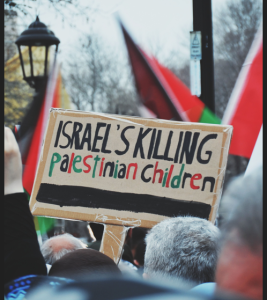
This is a good idea in principle and should favour all those who have attempted to speak up for Palestine only to find that their invitation to a university had been delayed indefinitely or cancelled. But, as with all these things, the devil will be in the detail – which may very well exclude free speech deemed antisemitic or likely to cause Zionists discomfort. Here’s a useful report from the CAF (Committee for Academic Freedom):
The university free speech complaints scheme is (finally) going ahead
After 17 months of drift, the university free speech complaints scheme is finally going ahead — giving campus free speech rules real teeth.
- Frederick Attenborough
- 18 June 2026

After 17 months of drift following the Government’s January 2025 reset of the Higher Education (Freedom of Speech) Act 2023, the free speech complaints scheme administered by the Office for Students (OfS) is at last going ahead.
The Government has now signed the commencement regulations needed to bring the scheme into force. From 1 September 2026, staff, visiting speakers and non-student members at English higher education providers will be able to complain directly to the OfS if they believe their lawful free speech or academic freedom rights have been infringed.
Just as importantly, from April 2027, the mandatory free speech conditions of registration will place a far more serious constraint on university decision-makers’ tendency to let vague and legally questionable understandings of “hate speech”, “harm” and “harassment” encroach on lawful free speech. Providers that breach those conditions will face the possibility of substantial financial penalties: either £500,000 or 2 per cent of their income, whichever is higher.
Make no mistake: this is a major step forward. In practical terms, it means the sector’s free speech regime will finally have meaningful regulatory force, with senior leaders no longer quite so free to launder speech-restrictive policies, training programmes and curriculum interventions through the language of inevitable – and, so we are always assured, terribly kind and well-meaning – equality-law compliance.
One thing those outside the sector often miss is that, until now, universities have been remarkably difficult institutions to challenge when they get this wrong. The complaints scheme offers something that existing, extremely costly and lengthy routes like judicial review or an Employment Tribunal claim often cannot: a quicker, free-to-use route to redress when free speech or academic freedom rights are infringed.
Crucially, it also occupies a space that those existing remedies have never properly covered. Many potential breaches are cumulative or informal; others are rooted in academic freedom principles informed by Article 10 Strasbourg jurisprudence, or disappear into the “black box” of what universities call academic judgement, making them difficult to shoehorn into the language of either public law or employment law. The result is that a great deal of institutional pressure on lawful speech has fallen between the cracks: serious enough to chill academic life, hamper career development and stigmatise those deemed to be exhibiting the verbal and cognitive symptoms of Wrongthink, but not always easy to translate into a conventional legal claim.
We are all, of course, wearily familiar with some of the more obvious breaches likely to come before the OfS: the cancellation of “controversial” speakers, expansive and overtly politicised speech codes, and complaints processes in which the disciplinary procedure too often becomes the punishment.
But as the Committee for Academic Freedom’s (CAF’s) casework consistently shows, many of the problems are subtler and, in some ways, more insidious: political litmus tests in recruitment and promotion; top-down interventions into teaching and curriculum design; research funding priorities shaped by ideological fashion; stridently partisan interventions on controversial political matters by institutional leaders; harassment training that blurs the law until the language of a “hostile environment” starts to mean little more than speech someone finds upsetting; the embedding of contested theoretical and ideological claims in quality assurance and compliance documentation; and the chilling effect created by anonymous speech-reporting systems.
With a specialist regulator now able to investigate such complaints and recommend remedies – including requiring universities to review decisions, pay compensation or change their internal processes – the era in which senior administrators could mark their own homework in an atmosphere of backslapping bonhomie should, at last, begin to draw to a close.
Not that it should have taken this long to get here. As originally enacted, the legislation rested on two principal enforcement mechanisms: a statutory tort, which would have enabled individuals to bring civil claims, and the specialist complaints scheme.
Yet one of Bridget Phillipson’s first acts on taking office in July 2024 was to pause commencement of the Act’s remaining provisions. Then, in January 2025, the Government confirmed that the statutory tort would not be brought into force after all, while insisting that a revised complaints scheme would follow once “necessary” legislative changes had been made.
By the time the main free-speech duties finally commenced on 1 August 2025, however, the complaints scheme still had not materialised. The Government was, apparently, considering its options. New Year came and went. It needed more time. A suitable “legislative vehicle” had not yet been identified. The dog had eaten their homework. The result was a strangely hollowed-out settlement: universities were subject, in principle, to new statutory duties, but academics still had no practical specialist mechanism by which to enforce them.
Thankfully, that will soon no longer be the case. And it would be remiss of me not to point out that we finally got here partly because of sustained pressure from those who refused to let the issue drop, including CAF, Alumni for Free Speech, Academics for Academic Freedom and the Free Speech Union. Alongside the FSU’s legal challenge to Bridget Phillipson’s decision to pause further commencement of the Act, we each played our part in organising letters to ministers, circulating briefings and drafting parliamentary questions urging the Government to bring the scheme into force.
There are, however, still challenges ahead. The scheme will only be as effective as the cases that come before it. Without some degree of upstream filtering, meritorious complaints may be lost simply because the underlying free speech or academic freedom issues are not clearly articulated, properly evidenced, or framed against the relevant legal and regulatory tests.
That is where organisations such as CAF have an important role to play: helping academics and others identify the core issues in potential complaints and structure them in a way that gives the OfS the clearest possible basis for action.
Universities should be places of open inquiry and robust disagreement. If the OfS receives a well-formed pipeline of cases and is willing to act decisively, this scheme could, over time, begin to shift institutional behaviour – and with it, the culture on campuses up and down the country.
This article forms part of the Committee for Academic Freedom’s monitoring of developments in UK higher education. To receive monthly updates and analysis on cases affecting academic freedom, click the link and subscribe to our newsletter.