

26 February 2026
At a well-attended gathering in a Parliamentary room on Tuesday, the British-Palestine Committee hosted experts from Forensic Architecture and Earshot who presented their report on the ugly massacre of 15 Palestinian aid workers in Gaza last year. As with the murder of Hind Rajab and many other outrages over the past two years, it left no room for doubt that senior Israeli officials have given carte blanche to the IDF to murder Palestinians including members of the press, medical personnel, teachers and academics and humanitarian workers. Here is a brief summary of the report from the Gaza Herald.
Rafah Paramedic Massacre: Nearly 1,000 Bullets Fired at Emergency Vehicles and Aid Workers
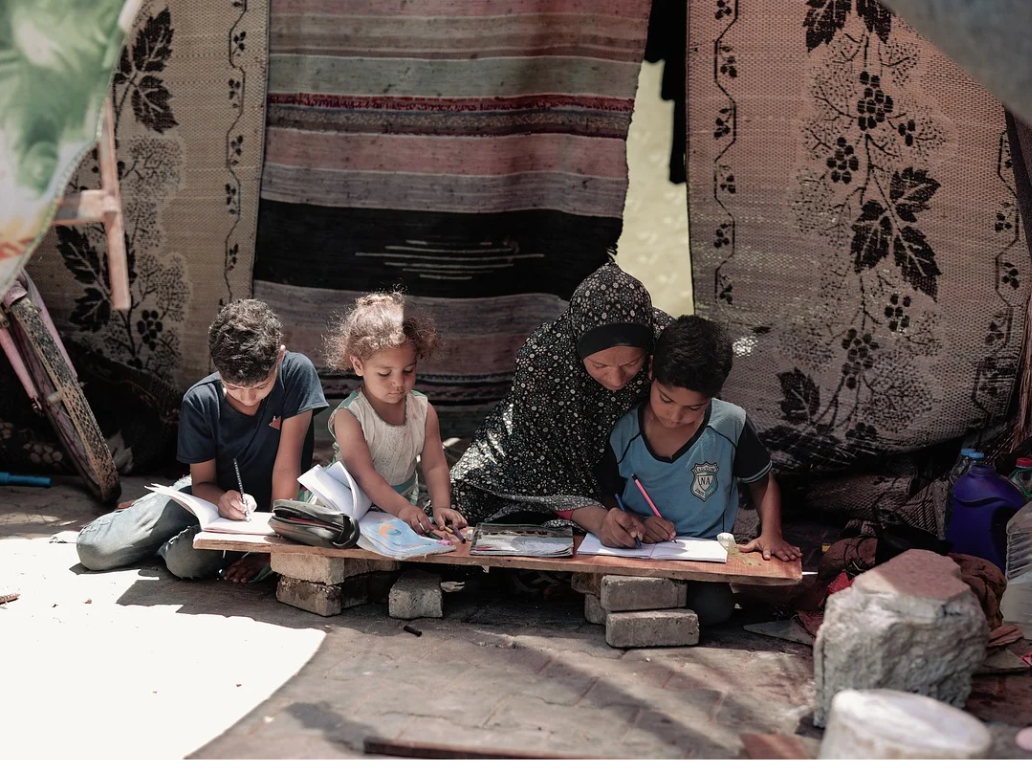
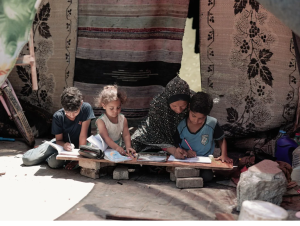
Daily Life Amid War, Voices from Gaza, 24 February 2026
Gaza Herald_A joint investigation into the Rafah paramedic massacre has revealed that Israeli soldiers fired approximately 1,000 bullets, including at least eight shots discharged from extremely close range. The investigation was conducted by the independent research groups Airwars and Forensic Architecture, drawing on eyewitness testimonies and detailed analysis of audio and visual evidence.
The findings indicate that several aid workers were deliberately killed, with at least one victim shot from a distance of less than one meter.
The massacre took place on March 23, 2025, resulting in the deaths of eight members of the Palestinian Red Crescent Society, six Palestinian Civil Defense personnel, and one employee of a United Nations relief agency.
On March 27, a team from the United Nations Office for the Coordination of Humanitarian Affairs (OCHA) managed to access the area. They discovered ambulances, UNRWA vehicles, and a fire truck that had been destroyed and partially buried under debris. The body of a Civil Defense worker was also found beneath the fire truck. However, the team was forced to suspend its mission due to deteriorating security conditions.
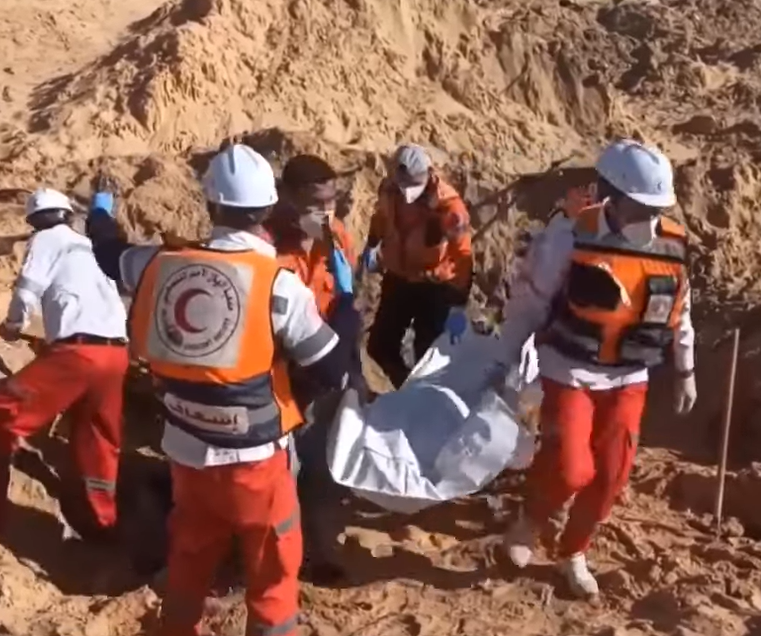
Later, on March 30, a field inspection carried out by OCHA officials and Palestinian Red Crescent teams uncovered a mass grave near the destroyed emergency vehicles. The grave contained the bodies of eight Red Crescent workers, five Civil Defense personnel, and one United Nations staff member.
The incident sparked widespread international condemnation. The International Federation of Red Cross and Red Crescent Societies described the attack as the deadliest assault on humanitarian workers in nearly a decade.
Following the discovery of the mass grave and the emergence of video and audio recordings captured by the aid workers themselves, Israel altered its account of the incident multiple times. A subsequent internal military investigation concluded without recommending criminal charges against the units involved.
The investigation found that the aid workers were subjected to an ambush and sustained gunfire that lasted for more than two hours, despite no evidence that Israeli forces were fired upon.
Audio analysis documented at least 910 gunshots, including 844 rounds fired within just five and a half minutes. Approximately 93 percent of the initial shots were directed specifically at emergency vehicles and humanitarian workers. Evidence also suggests that at least five shooters fired simultaneously, while witness accounts indicate that as many as 30 soldiers may have been present at the scene.
According to the investigation, Israeli soldiers initially positioned themselves on an exposed sand dune that provided a clear vantage point. The emergency lights and humanitarian markings on the vehicles were clearly visible. Despite this, the soldiers continued firing as they advanced toward the victims, eventually moving among the vehicles and executing some aid workers at extremely close range.
The report also noted that Israeli forces carried out extensive bulldozing operations at the site following the attack. The area’s appearance was later further altered by the construction of what is known as the Morag security corridor in southern Gaza, as well as the establishment of an aid distribution point operated by the Gaza Humanitarian Foundation, which is supported by Israel and the United States.
Al-Munther Abed, the sole survivor of the massacre and a volunteer with the Palestinian Red Crescent, confirmed that he witnessed ambulances being subjected to intense gunfire.
On April 6, 2025, a video recorded on the mobile phone of paramedic Rifaat Radwan was released. The footage captured the final moments before he and his colleagues were killed, showing ambulance emergency lights flashing clearly at the time they came under fire.
Following the release of this evidence, Israel issued a statement saying the incident was undergoing a “thorough and comprehensive investigation.”
Katherine Gallagher, a lawyer at the Center for Constitutional Rights, stated after reviewing the investigation summary that the case was “well documented through multiple, corroborating sources,” describing it as both “extremely strong and deeply disturbing.”
Several international human rights organizations, including Human Rights Watch and Physicians for Human Rights, described the incident as a “massacre,” using the term in accordance with international humanitarian law, which defines it as the intentional and violent killing of unarmed individuals who pose no direct military threat.