



11 September 2026
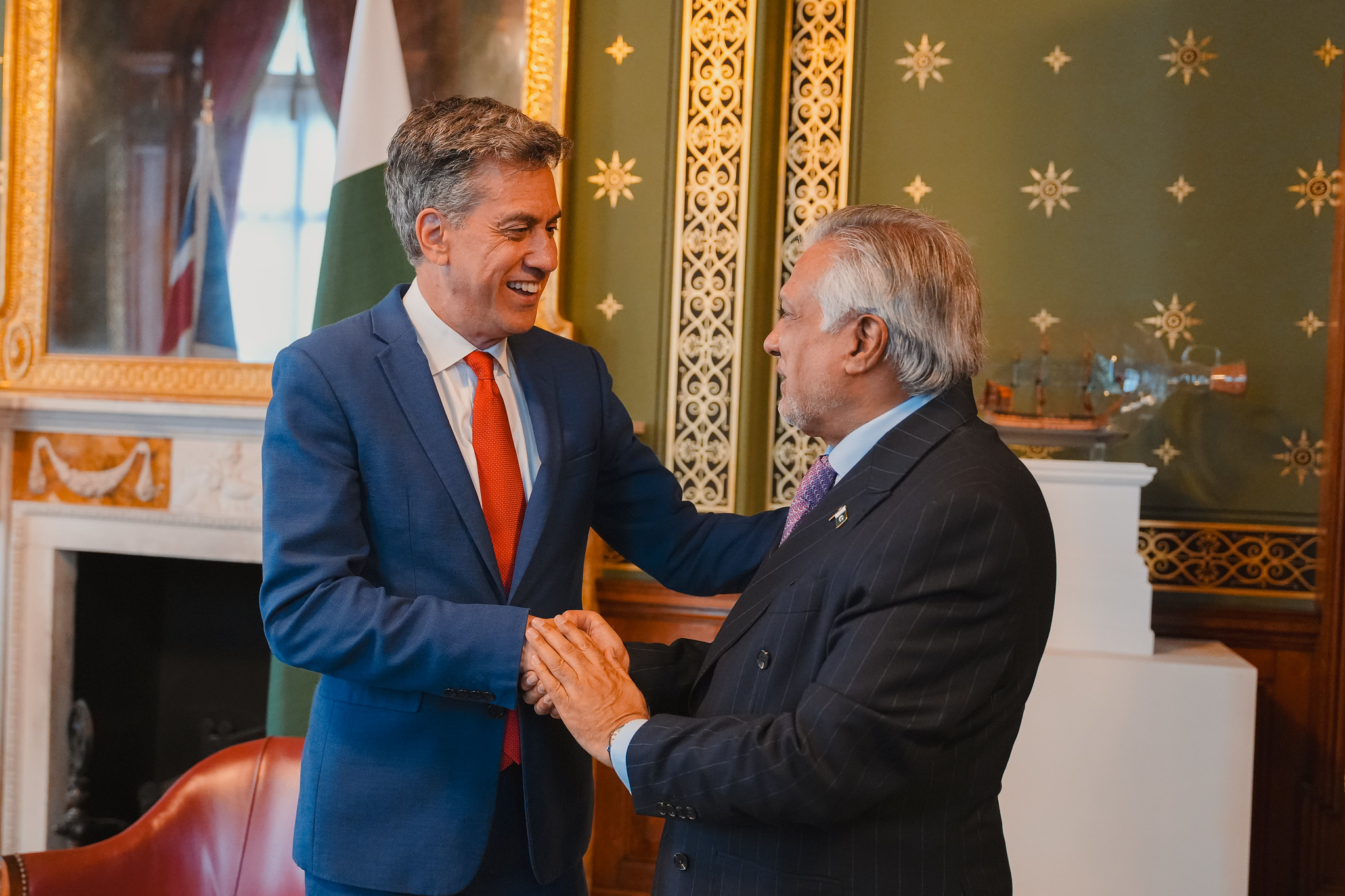
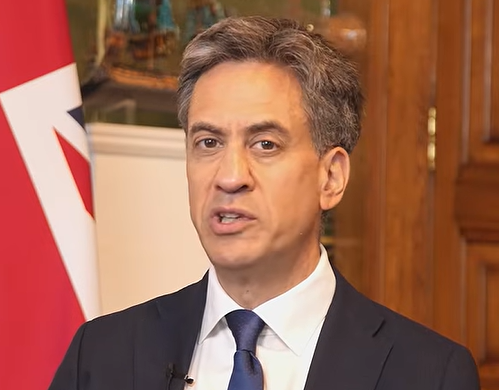
The announcement in Parliament by Ed Miliband, the British foreign secretary, on Tuesday 8 September that Britain is acting decisively against the illegal Israeli settlements in the West Bank has aroused great controversy and not least among the Palestine activist community. Some have dismissed it as little more than an empty gesture serving merely to deflect attention from the ongoing ethnic cleansing. Others are cautiously optimistic that it marks a turning-point in Western policy: only a beginning perhaps, but one that makes further action almost inevitable. Below are several examples of each response, to facilitate the debate among BRICUP supporters.
Here’s an excerpt from a deeply sceptical article in Declassified UK, “Do Andy Burnham’s sanctions on Israel go far enough?” by Phil Miller and John McEvoy:
… But do Burnham’s new sanctions go far enough?
Bloomberg has already reported that British diplomats briefed US counterparts that the move is “largely symbolic” and will have “no material impact on the UK’s wider relationship with Israel on trade or security”.
In practice, there are many more measures Labour could take to hold Israel accountable if it wanted, as Declassified highlighted when other allies like Saudi Arabia were engaged in serious war crimes.
In September 2024, Keir Starmer’s government suspended around 30 licences for arms which could be used by Israel for offensive operations in Gaza.
Miliband told parliament today that those sanctions would remain in force, with further arms export restrictions on items that “materially contribute” to the occupation of Palestine.
However, the F-35 “carve-out” that allows UK firms to continue supplying fighter jet parts to a global pool used by Israel will stay firmly in place.
… Miliband said today that stopping the supply of parts to the global pool would see “the downing of the whole programme which is crucial to our NATO and other allies”.
Legal experts, however, have said the “carve-out” falls foul of Britain’s obligations under the Genocide Convention.
… It appears that UK-supplied trainer aircraft components – which were also excluded from Starmer’s arms restrictions on Israel – will continue to flow to Israel.
This would mean UK firms can still export parts for Israel’s M-346 aircraft, which are used to train pilots to fly fighter jets such as the F-35, F-16, and F-15.
The Foreign Office has acknowledged in internal briefings obtained by Declassified that the M-346 is “used to train IAF [Israeli Air Force] fast-jet pilots” and “facilitates the development of an offensive capability”.
These limitations on the government’s arms suspensions on Israel have amplified calls for a two-way arms embargo, yet Burnham has shown no signs of implementing one.
Like his predecessor David Lammy, Miliband was also cautious about acknowledging Israel’s commission of war crimes in Gaza.
Instead, Miliband would only go so far to say “there is increasing evidence that war crimes appear to have been committed” in the besieged strip.
A key protest group which has sought to disrupt the arms trade between the UK and Israel, Palestine Action, was proscribed by the Labour government in June 2025.
Burnham has signalled no intention of reversing that decision, despite thousands of people being arrested for allegedly showing support for the group and UN experts accusing the government of state overreach.
Miliband also took aim at the Boycott Divestment and Sanctions movement, saying he “wholeheartedly” opposes it and wants to maintain “valued trade with green line Israel”.
… Declassified revealed earlier this year that over 2,000 Britons – including dual nationals – had served for the IDF amid the Gaza genocide.
Among them was Levi Simon, who was seen “rummaging through the underwear drawers of Palestinian women forced to flee their homes” in Gaza.
The UK government’s failure to collect information on those leaving to fight in an army accused of genocide or investigate them upon return raises serious concerns.
Over 26,000 people signed a recent letter calling on the government to track the movements of Britons who served in the IDF and conduct independent war crimes investigations.
The letter was also signed by over 70 prominent figures including Polanski, genocide scholar Martin Shaw, and anti-apartheid politician Andrew Feinstein.
Despite this, the Burnham government has failed to issue a meaningful response to these demands or take any further action.
This raises further concerns about the UK government’s compliance with the ICJ ruling on Israel’s occupation in 2024 as well as its obligations under the Genocide Convention.
If the UK government makes no effort to stop its citizens travelling to maintain the occupation or genocide, this could be seen as tacit support for Israel’s military operations.
… The Sunak and Starmer governments sent hundreds of surveillance flights over Gaza during the genocide from Britain’s airbase on Cyprus, saying they were looking for hostages held by Hamas.
But no evidence has been provided that they assisted with this purpose. Instead, they may have captured evidence of Israeli war crimes or even provided intelligence for them.
Parliamentary questions and freedom of information requests for the footage were repeatedly rebuffed by Conservative and Labour ministers.
… Even the family of James Henderson, a British veteran and aid worker who was killed in Gaza by Israel, has been unable to access RAF surveillance footage from that day.
Will Burnham’s government now take a more transparent approach to these issues? Will footage be disclosed to the Henderson family, media and the International Criminal Court?
Will MPs be given more thorough answers to questions about why so many RAF cargo flights have flown from Cyprus to Tel Aviv?
Ali Abunimah of The Electronic Intifada offers a thoroughly negative assessment in “Don’t be fooled by Britain’s fake support for Palestine”:
British foreign minister Ed Miliband on Tuesday announced plans to ban imports from Israeli settlements in the occupied West Bank.
He called Israel’s expulsion of Palestinians from their West Bank lands “ethnic cleansing” and finally accepted the 2024 International Court of Justice ruling that Israel’s occupation of the West Bank and Gaza Strip is illegal.
But while his statement in Parliament – and a shorter video on X – were ostensibly about supporting Palestinians, they reveal that Britain’s overriding priority remains protecting Israel as a racist Jewish state.
Miliband begins not with Palestinians but with Israel, his attachment to it and Jewish feelings.
He promises several hundred million dollars to fight “anti-Semitism” – a much-abused term Israel and its lobby have redefined to mean opposition to Israel’s crimes and its racist ideology Zionism.
He recalls idyllic childhood visits to Tel Aviv and picking oranges on a kibbutz, but does not mention that the “sanctuary” Israel gave his grandmother and other relatives was only made possible by the Nakba – the deliberate expulsion, under British supervision, of Palestine’s indigenous population to make way for European settlers such as Miliband’s family.
While young Ed was picking oranges, Israel was bombing Palestinian refugees, murdering Palestinian writers and poets and imposing apartheid across historic Palestine.
Pro-Zionist, anti-Palestinian
He proclaims himself “unwavering” in support of a state that has spent almost eight decades expelling, occupying, besieging and killing Palestinians – and the last three years perpetrating genocide.
Israel’s supposed “right to exist as a homeland for the Jewish people” is sacred and beyond question.
Palestinians, meanwhile, appear mainly as objects of suffering whose future Britain and its allies are entitled to decide, including by admonishing the collaborationist Palestinian Authority to “accelerate reform” – whatever that means.
Miliband repeatedly condemns Hamas, demands that it disarm and bars it from any role in Gaza’s future. He makes no comparable demand that Israel dismantle the army that continues to destroy Gaza and carry out daily massacres there.
Nor does he deign to tell Israel which of its blood-soaked leaders can hold office.
Effectively justifying genocide, Miliband asserts that 7 October “makes plain the grave threats that Israel faces” and that it “has every right to defend itself.”
Echoing Trumpian neocon propaganda, he claims falsely that “Iran continues to threaten Israel and Jews across the world” – when it was Israel that bombed a synagogue in Tehran during the US-Israeli war of aggression, the second such unprovoked attack in less than a year.
Miliband also vows more British sanctions against Lebanese resistance organization Hizballah, which he mislabels as an Iranian “proxy,” as if Lebanese people have no right or interest to defend their land against Israeli massacres and occupation.
The UK foreign minister’s efforts to swaddle his mild sanctions in love for Israel were – as expected – to no avail. Israel’s foreign minister Gideon Sa’ar swiftly announced retaliation, including the closure of Britain’s consulate in occupied East Jerusalem and travel bans on British officials.
Supporting genocide
Substantive discussion of Gaza is buried deep in the statement, after Miliband’s declarations of love for Israel and lengthy discussion of West Bank settlements.
Even then, he begins by repeating Israeli atrocity propaganda, claiming that on 7 October: “Men, women, children and babies killed, mutilated, and tortured by Hamas terrorists.”
In fact only one Israeli baby was killed in her home on 7 October, Milla Cohen, inadvertently shot through a closed door.
Miliband is also silent about the large number of Israelis killed by Israel’s own forces that day in a widescale application of the Hannibal Directive.
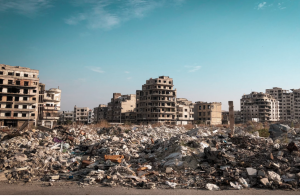
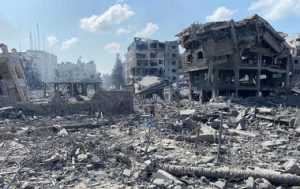
In Gaza, Miliband acknowledges mass killing, deliberate deprivation, forced displacement and wholesale destruction. He notes that more than 70,000 people have been killed, including at least 20,000 children.
Yet he refuses to call it genocide, despite repeated declarations by Israeli leaders that their goal is to destroy Gaza and expel its people.
Instead, Miliband claims Britain must await a final judgment from an international court. This is cowardly and depraved political evasion dressed up as respect for law. Under the Genocide Convention, governments must act once a serious risk is apparent – not after a court confirms the extermination has occurred.
Britain does not await final judgments before naming alleged international crimes when the accused is an official enemy. Within weeks of Russia’s invasion of Ukraine, Prime Minister Boris Johnson declared unequivocally that President Vladimir Putin and his army were “committing war crimes.”
Britain has sanctioned Russia, armed Ukraine, sent investigators and promised prosecutions while international inquiries were still beginning.
British police are investigating alleged war crimes in Ukraine while arresting thousands of British citizens for opposing genocide in Gaza.
Miliband himself called Russia’s intervention in Ukraine “illegal,” although no international court has ruled it so.
Nor does he promise to end British military support for Israel. He refers to suspended arms licenses and restrictions on exports that “materially contribute to the occupation” – a vague standard if ever there was one – but announces no comprehensive arms embargo, end to military cooperation or halt to British assistance enabling Israel’s crimes, including ongoing British military overflights of Gaza shrouded in official secrecy.
Miliband offers no plan to identify, arrest and prosecute Israeli officials and soldiers responsible for genocide, crimes against humanity and war crimes, or any pledge to arrest the already indicted war crimes fugitives Benjamin Netanyahu, Israel’s prime minister, and former defense minister Yoav Gallant.
Israeli perpetrators are not threatened with the “full force” of British sanctions. Miliband reserves that language only for those involved in settlements.
Rescuing racist Israel
This, apparently, is the post-Keir Starmer reset – the “better” policy Prime Minister Andy Burnham promised after admitting Labour “didn’t get it right” on Gaza.
The reality was exposed before Miliband spoke. Bloomberg reported that British diplomats had privately assured Washington the measures were “largely symbolic” and would have no material impact on Britain’s wider trade or security relationship with Israel.
Burnham’s PR push is likely meant to placate angry Labour voters without disturbing the relationship sustaining Israeli apartheid and genocide and the regime of Jewish supremacy these crimes perpetuate.
The narrow focus on settlements reflects the real purpose – candidly stated by Miliband – of rescuing the so-called two-state solution.
This “solution” offers Palestinians disconnected enclaves under permanent Israeli military, economic and political domination – the equivalent of apartheid South Africa’s Bantustans. They would be expected to call these fragments a state, renounce their right to return and accept Israel’s permanent existence as a Jewish supremacist entity.
Consequently, Western governments treat settlements as a deviation from an otherwise legitimate Israel, rather than one expression of a brutal settler-colonial project founded on mass expulsion.
Their disagreement with Israel is only over how much Palestinians should be dispossessed.
Israel’s government and much of its Jewish population support total dispossession, including through mass expulsion and extermination, to take over all of historic Palestine.
By contrast, Britain and other Western governments believe that the Zionist theft of 78 percent of the land of the Palestinians in 1948 should be enough.
Their joint official statement explicitly says the objective is to “protect” the two-state solution.
The Élysée’s statement gives the same justification.
This is coordinated action to rescue a segregation plan, not end Israel’s racism. That is why Miliband can recognize an imaginary “State of Palestine” and condemn settlements while maintaining his “unwavering” support for Israel and proclaiming: “I wholeheartedly oppose the boycott, divestment, sanctions or BDS campaign.”
Miliband says the British will no longer be “bystanders.” But that has never been the case. Britain will continue protecting Israeli apartheid, rejecting meaningful pressure and refusing to name the genocide it enables.
This is not solidarity with Palestinians. It is just the latest Western attempt to rescue the genocidal Jewish supremacist state that Britain created.
But Leah Levane, for JVL (Jewish Voice for Liberation) is cautiously hopeful: “On the UK’s Sanctions on Settlement Goods and more”
JVL welcomes the sanctions on Israeli settlement goods announced by Foreign Secretary Ed Miliband in response to Israel’s multiple crimes against the Palestinian people. The moves, while late and insufficient, represent an advance on the inaction of previous governments, including that of Keir Starmer. We welcome the ban on provision of services supporting the construction of illegal settlements and the outlawing of events, like the recent one in Edgware, promoting the sale of settlement properties.
This is not a case of unilateral UK action. It aligns Britain with a dozen other countries making similar moves, including France, Canada and Ireland. Spain has gone further and implemented a full arms embargo, which we urge Britain to emulate. After years of ineffectual words and occasional action against a few individuals, at last we can see a potentially significant shift towards holding the state of Israel to account.
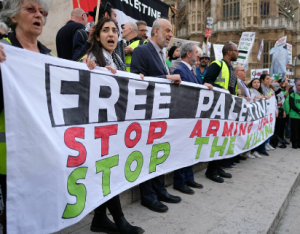
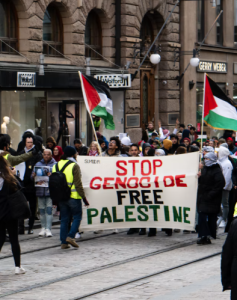
Much more needs to be done and we welcome the Foreign Secretary’s acknowledgement that campaigning by people of all backgrounds, nationally and internationally, and young people in particular, has a positive role to play. Demonstrations against what the government has clearly identified as ethnic cleansing are not “hate marches”.
We condemn accusations of antisemitism (or to quote Mike Huckabee, “Jew Hate”) levelled against Ed Miliband, who is Jewish, for the steps he has outlined today. We join with the Foreign Secretary in rejecting all attempts to associate British Jews collectively with the actions of a rogue state, evoking a classic antisemitic trope. All too often it is Israel’s supporters rather than its critics who conflate British Jews with Israel, attempting to suppress criticism of Israel’s actions with allegations of antisemitism. Chief Rabbi Ephraim Mirvis, who claimed that sanctions will have a “negative impact” on British Jews, has shown no compassion for the Palestinian people and explicitly referred to Israel’s army in Gaza as “our heroic soldiers”.
Responses from other Israel apologists are also predictable and pathetic. For example, MP Peter Prinsley, former vice-chair of Labour Friends of Israel, claimed the time is not right for sanctions. But for all who take his view, there will never by a right time to hold Israel to account.
We hope that the limited UK action announced today, along with other nations, will at least slow down the pace of Israel’s heinous and ongoing assaults on the Palestinians. But we are not optimistic. Israel has already retaliated by closing the British consulate in Jerusalem and banning a number of pro-Palestinian MPs from entering the country, and there have been threats of counter-measures from US Ambassador to Israel Mike Huckabee. We urge the Foreign Secretary and Prime Minister to recognise the Israeli state’s determination to pursue its expansionist goals and urgently start preparing plans for more forceful action against it.
We echo UN Special Rapporteur Francesca Albanese’s opinion that a settlement trade ban has to be part of “a true paradigm shift to Israel-Palestine that ultimately seeks to implement the international court of justice advisory opinion in 2024”. This stated that Israel’s presence in the occupied territories was ‘unlawful in its entirety’. The opinion rules, she says, that, “all states carry an obligation…not to recognise the situation as legal, and not render aid and assistance in maintaining it”.
And here is Hugh Lovatt with a similar assessment in +972, entitled “UK settlement sanctions are an opening gambit. Here’s what should follow”
Britain’s decision last week to ban imports from illegal Israeli settlements signals a growing Western break with decades of empty rhetoric and inaction.
European governments have repeatedly condemned Israel’s settlements, warning that they were destroying the possibility of Palestinian statehood. They threatened consequences if long-standing red lines, such as the E1 settlement project east of Jerusalem, were crossed. Yet even as Israel blew past those lines, the threatened consequences never materialized.
The measures announced by British Foreign Secretary Ed Miliband are now catalyzing a long-overdue policy reset. And Britain is not alone.
France and Canada have committed to introducing their own settlement-import bans, building on steps already taken or under development by Spain, Ireland, the Netherlands, Norway, and Belgium. Denmark, Finland, Iceland, Poland, Portugal, and Sweden have also declared support for European restrictions or indicated that they are considering further national measures.
But the UK is going further than just banning settlement goods. It will also prohibit the advertising of settlement real estate, and sanction individuals and companies providing construction, infrastructure, financing, or other services that facilitate settlement expansion. In addition, the government will refuse licenses for arms and other exports that materially contribute to the occupation.
These are, of course, so far only planned actions. Full details must still be worked out before the legislation enters into force. The government has not addressed British charitable funding for Israel’s settlements or their continued inclusion in some bilateral agreements, such as Britain’s convention for the avoidance of double taxation with Israel. Nor is it yet clear whether the government will merely sanction selected settlement facilitators or prohibit settlement-related economic activity as a general rule.
Nevertheless, the package is the most far-reaching adopted by any Western country — targeting not only Israeli settlements in the West Bank but also in the occupied Golan Heights and East Jerusalem. Miliband’s subsequent refusal to rule out action against Israeli banks and the wider financial sector suggests that the government understands the scale of what may be required.
The most important part of Miliband’s statement, however, may not be the measures themselves, but the legal determinations accompanying them. The British government now considers that “settler terrorists” are carrying out ethnic cleansing in areas of the West Bank, often with the acquiescence or support of Israeli authorities.
More fundamentally, the government formally endorsed the International Court of Justice’s 2024 conclusion that Israel’s continued presence in the occupied Palestinian territory is unlawful and should be brought to an end “as rapidly as possible.” As Miliband told parliament, this “unlawfulness … should be reflected in the economic relationships we choose to have with the occupied territories.”
The government’s language echoes the ICJ’s own view that states are required “to prevent trade or investment relations that assist in the maintenance of the illegal situation created by Israel in the occupied Palestinian territory.” It is also rooted in UN Security Council Resolution 2334, which calls on states to distinguish, in their relevant dealings, between Israel and the Palestinian territories it has occupied since 1967.
For the past decade, Europe’s differentiation policy has largely meant excluding Israeli settlements from new agreements with Israel, denying settlement products preferential tariffs, and requiring them to be correctly labelled. The UK is now going further by systematizing this territorial distinction across the full range of its economic and regulatory relations. The ultimate aim should be to ensure that no part of its bilateral relations with Israel recognizes, facilitates, or financially sustains Israel’s unlawful actions.
Precedent to follow
The political and economic weight of like-minded European countries, working with Canada and other partners, could now play a unique role in catalyzing broader measures.
Coordinated restrictions would reduce the opportunities for settlement-linked commerce to be rerouted through other jurisdictions. National differentiation measures would also create important precedents that other governments could adopt around the world, while increasing pressure on the European Commission to introduce an EU-wide ban on trade and services.
Of course, international action may face opposition from the United States, especially in the UN Security Council where it regularly vetoes criticism of Israel. This should not, however, mean international paralysis, and there is precedent here that can be followed: During the decades preceding Namibian independence in 1990, repeated Security Council deadlock and South Africa’s refusal to end its apartheid rule over the territory prompted the General Assembly to act.
Working through the UN Council for Namibia, the General Assembly sought to protect the Namibian people’s rights by challenging corporations involved in the illegal exploitation of the country’s natural resources, including through legal action. It also promoted non-recognition of South Africa’s administration there — a duty affirmed by the ICJ’s 1971 Advisory Opinion, which ruled that South Africa’s presence there was illegal — by issuing Namibian travel documents and ID cards.
Britain and its partners should similarly use the General Assembly’s long-running emergency special session on Palestine, convened for the first time in 1997 in response to deadlock in the Security Council. Drawing on its past practice, the General Assembly could establish an ad hoc working group to develop and promote coordinated measures by member states against Israel’s occupation.
The existing UN Register of Damage, whose mandate is currently limited to harm caused by Israel’s West Bank separation wall, could also be expanded to document losses caused by settlement expansion as the basis for future Palestinian reparations.
Challenging impunity
Differentiation, however, cannot become a means of shielding Israel itself from consequences. Focusing on the settlement enterprise is a necessary starting point given the immediate harm it is causing to Palestinians. But it is not a rogue venture conducted by a few violent extremists. The settlement project is planned, financed, and protected by the Israeli state, and has been supported by successive Israeli governments. It is also largely backed by the Israeli public.
Europe cannot meaningfully oppose the occupation and settlement of Palestine while continuing to insulate the state and society that sustain these policies. Nor are Israel’s internationally unlawful actions confined to the West Bank. They extend most brutally to Gaza, where a growing body of UN experts, human rights organizations, and genocide scholars has concluded that Israel is committing genocide.
Severing the international financial linkages sustaining the settlement project could significantly constrain Israel’s annexation of Palestinian territory. But this will not, by itself, alter the attitudes of an Israeli public that has experienced few external costs for supporting the occupation and is largely opposed to Palestinian statehood.
Europe and its partners must therefore be prepared to impose costs on their broader relations with Israel — including, in the case of the European Union, by withdrawing the preferential tariffs granted to Israeli products under the EU-Israel Association Agreement.
Israel has already defied the UN General Assembly’s September 2024 demand that it end its unlawful presence in the occupied Palestinian territory within 12 months. The UK and its partners should now develop a timebound, sequenced roadmap for doing so, with clear milestones. Israel’s continued non-compliance could trigger progressively wider political, financial, and trade measures, backed by the General Assembly and regional organizations such as the Arab League, the Organization of Islamic Cooperation, and the EU.
The value of this overall effort extends beyond the direct economic costs imposed on Israel and its settlements. It would demonstrate that states can give effect to international law even when the Security Council is blocked.
Britain’s immediate task is therefore to turn its opening gambit into a broader coalition of like-minded countries capable of acting collectively against the settlements — and, from there, to begin challenging the wider impunity that has enabled decades of Israeli aggression and occupation.
Hugh Lovatt is a policy fellow with the Middle East and North Africa programme at the European Council on Foreign Relations (ECFR).
…