25 March 2026
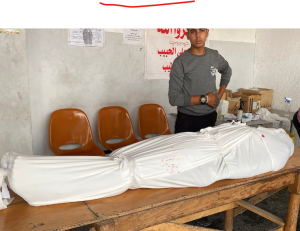
For over two years Israel targeted Palestinian medical personnel and academics in Gaza, killing hundreds in the most blatant of war crimes and crimes against humanity. Now Israel is applying the same criminal policy in Lebanon, as this article in The New Arab describes. States and professional bodies everywhere in the West should swiftly sanction Israel for these crimes, but will they?
After Israel killed two Lebanese professors, there are growing concerns for civilian and academic protections
Over 2,000 academics in Lebanon and around the world signed an online petition to be submitted to UNESCO and the UN Secretary-General António Guterres.
Fadia Jomaa, Lebanon
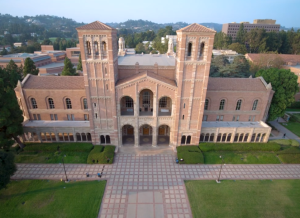
Weeks after an Israeli drone struck the Faculty of Sciences at the Lebanese University’s Rafik Hariri Campus in Hadath, a southern suburb of Beirut, killing two prominent professors, the incident continues to fuel national outrage over what many describe as unprecedented Israeli attacks on academic institutions, particularly Lebanon’s only public university.
In a post in X, Lebanon’s President Joseph Aoun slammed the attack, which killed the faculty’s director, Hussein Bazzi and chemistry professor Mortada Srour, describing it as “a crime condemned by all standards” and “a new chapter in the targeting of civilians.”
The shelling of academic and scientific institutions was “an assault on knowledge and humanity, and on the rights of Lebanese people to education and a secure life,” Aoun said, urging the international community to act to protect Lebanon’s educational and civilian institutions.
Other official condemnations quickly followed from the Ministry of Education, faculty associations, and the Dean of the Faculty of Education, expressing mourning and praise for the contributions of professors Bazzi and Srour to science.
The targeting of academics in Lebanon is part of an escalating Israeli assault on civilians and medical personnel that began on 18 March, and has since left a civilian death toll of over 1,070, including 116 children and 40 healthcare workers, and 2,966 injured, according to the Lebanese Ministry of Public Health.
Lebanese academics in mourning
Dozens of Lebanese academics gathered for a solidarity vigil at the university’s central administration building in Beirut.
Chemistry professor Rami Akoum told The New Arab that Bazzi was “a dedicated leader who worked day and night, often sleeping in his office to support colleagues, especially during the university’s most difficult times.”
Commenting on Srour, Akoum said he lived in Tyre, around 80 kilometres from Beirut, because of low salaries and transportation costs; he brought a mattress to his office to stay three days a week, ensuring continuity of teaching.
“He had the spirit of a child and remained cheerful despite the hardships he faced,” Akoum said.
Faculty members also shared a WhatsApp voice note Srour had sent the night before the attack, in which he urged colleagues to continue exams in case of an emergency. “Nobody knows what will happen to them,” he said.
Over 2,000 academics in Lebanon and around the world signed an online petition to be submitted to UNESCO and the UN Secretary-General António Guterres.
The petition condemned the attacks on educational institutions and staff, emphasised the need to protect universities during conflicts, and supported international efforts to ensure the continuity of education and research in crisis zones.
Lebanese political science professor Laure Abi Khalil told TNA that the academic community is experiencing “an unprecedented shock.”
“We saw violations at shelters, displacement sites, and hospitals, but we did not expect attacks on university campuses, killing a faculty dean and a professor who were only there to complete administrative work,” Abi Khalil said.
Some academics hesitated to sign the petition due to declining trust in international organisations, said Abi Khalil, but despite this doubt, “we feel a moral duty to defend our university and our fallen colleagues,” respected by grieving students who are planning protests in response.
Israeli claims
A statement by Avichay Adraee, the Israeli army’s Arabic-language spokesperson, made unsubstantiated claims that Srour was an active member of Hezbollah, allegedly using his scientific expertise for military purposes.
“He is a terrorist operative in Hezbollah’s aerial unit (Unit 127),” claimed Adraee, without mentioning Bazzi, while one local outlet repeated unverified Israeli claims that Bazzi had attended training in nuclear science in Iran.
“The continued focus on whether one of the professors was affiliated with Hezbollah is exactly what the media intends,” Maha Zaraket, a professor at the Faculty of Media at the Lebanese University, told TNA.
“Israel shifted the discussion from the killing of two university professors on a campus to questioning the identity of the victims, effectively stripping them of their status as victims,” said Zaraket.
She explained how social media posts first attempted to justify the killing by circulating a misleading image linking Bazzi to Ibrahim Aqil, one of Hezbollah’s military leaders.
“They then focused on his field of expertise in nanotechnology as if it were an accusation,” continued Zaraket. “When other academics challenged both narratives, the Israeli spokesperson redirected attention to Dr Srour, linking him to Hezbollah.”
Professor of modern literature at the Lebanese University, Rima Mawloud, said to TNA that although she did not know the two professors personally, it is clear that “targeting two professors at Lebanon’s official university, regardless of political or sectarian affiliation, is an attempt to suppress the knowledge our university contributes to the country.”
“Even if Dr Srour had ties to Hezbollah, this does not justify this attack and the killing of another professor. Israel’s statement only mentioned Dr Srour, making Dr Bazzi’s death appear accidental. The sanctity of the university campus must be respected,” Mawloud stressed.
First Gaza, now Lebanon
Growing concern is emerging in Lebanon over a possible pattern of targeting academic institutions and personnel, reminiscent of the killing of at least 190 academics in Gaza since October 2023.
Abed Kataya, the digital expert at SMEX, a Beirut-based digital rights and freedoms advocacy group, warned that Lebanon is a high-risk country because data is poorly protected, including traffic camera records and registry lists. “Communications are frequently breached,” Kataya told TNA. “All of this puts civilians, including university professors, at risk.”
Kataya explained that modern wars have seen a significant shift with the development of data analysis and artificial intelligence systems for targeting.
“AI and data analysis have been used to identify targets since 2021,” said Kataya. “It was used in Gaza in 2023 and in Lebanon in 2024. Gaza was treated as a live laboratory for testing weapons and AI in conflict.”
The Euro-Med Human Rights Monitor reported that Israeli attacks had killed at least 94 academics and university staff in Gaza, along with hundreds of teachers and thousands of students.
“Armies now rely on algorithms that collect data, including movements, phone signals, travel patterns and biometric information, and analyse it within seconds to assess individuals or locations before striking. Similar systems have reportedly been used in recent attacks by the US military in Iran and Venezuela,” Kataya said.
In the aftermath of the Gaza-Israel war, the UN Commission of Inquiry (OHCHR) warned that attacks on civilians and civilian infrastructure, like schools and universities, amount to war crimes and crimes against humanity.
International law professor Hassan Jouni told TNA that international humanitarian law provides “clear protection for civilians, including journalists, medical staff, and those working in educational institutions and academia.”
He explained that they are protected both “as civilians first, and under specific additional rules.”
“All parties must respect the principle of distinction between military and civilian targets,” he said, citing Articles 48 and 58 of the First Additional Protocol to the Geneva Conventions and provisions safeguarding medical and educational facilities.
He warned that targeting academics is especially serious, given their role in knowledge production, education, and societal rebuilding.
“Such attacks also amount to psychological warfare against Lebanese civilians, violating fundamental human rights, including the rights to life, health, housing, and freedom of expression,” Jouni added.
Jouni further highlighted customary international humanitarian law (IHL), which includes 161 binding rules of armed conflict codified by the International Committee of the Red Cross.
“These rules bind all states, regardless of treaty ratification, preventing any party, including Israel, from evading its obligations,” he said.
This article is published in collaboration with Egab.