
24 March 2026
On the principle of “academic freedom”, UCD management defends academics who participate in research projects with Israeli universities which are deeply implicated in Israel’s genocidal assault on Gaza and terror campaign in the Occupied West Bank. But on the grounds that it is causing an “environmental hazard” management has secured the support of the local authority to tear down a pro-Palestine encampment near the entrance to the University. As this article by Joshua Lobo in the electronic intifada explains, for UCD management “academic freedom” includes association with the worst genocide in modern history.
Dublin denies freedom to students protesting against genocide
Joshua Lobo The Electronic Intifada 24 March 2026
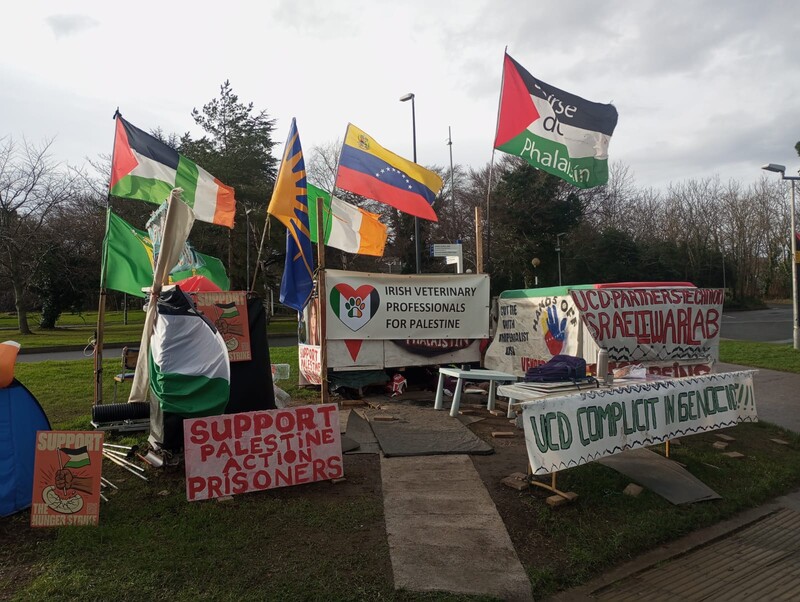
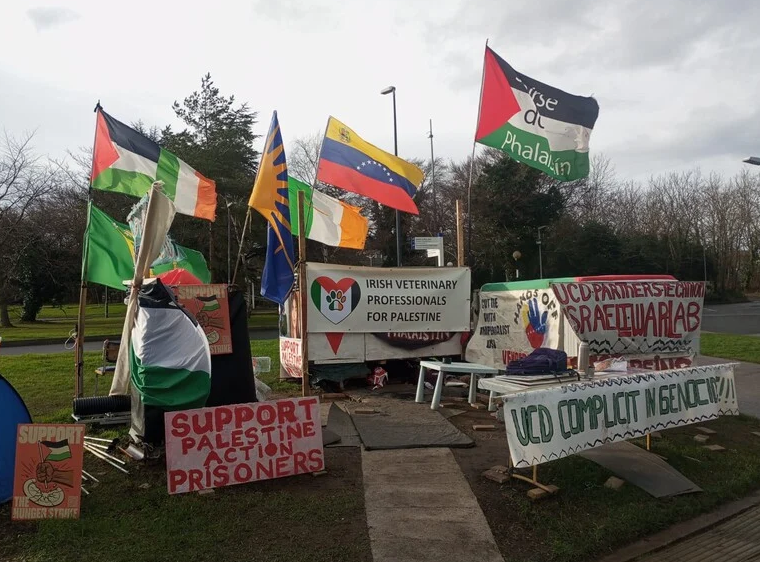
I was alone at the University College Dublin encampment when I heard knocks on the cabin door. Eight police officers were standing outside – as well as staff from Dún Laoghaire-Rathdown County Council.
A body camera worn by one of the police officers blinded me. The police then informed me that they had arrived to clear an “illegal encampment” on public land and assist any homeless people who may be living there.
I made clear that I was not homeless but a UCD alumnus and that the encampment was a political protest.
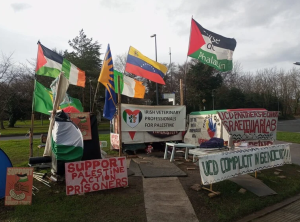
Before we were evicted in the early hours of 13 January, we had been camping at the entrance to UCD on the N11 road for 132 days. On occasions, that had involved sleeping in subzero temperatures.
The encampment began as a response to new research partnerships between UCD and Israel’s Technion and Ben-Gurion University of the Negev.
Both of those institutions play a direct role in the ongoing genocide of Palestinians in Gaza and in upholding Israel’s apartheid system. The Technion, in particular, serves as a laboratory for developing weapons that are tested out on Palestinians.
UCD confirmed in 2024 that it was participating in 11 European Union-funded projects with Israeli partners.
The 1948 Genocide Convention places an onus on governments and public bodies around the world to prevent and punish the crime of genocide.
By maintaining cooperation – and even worse entering new partnerships – with Israel as it inflicts a genocide on Gaza, UCD is refusing to honor its obligations under international law.
Our encampment was set up amid a wider push by students and teachers across Europe. The aim of that push is to expel Israel from Horizon Europe, the EU’s scientific research program.
Israeli firms and institutions receive millions in EU research grants every year.
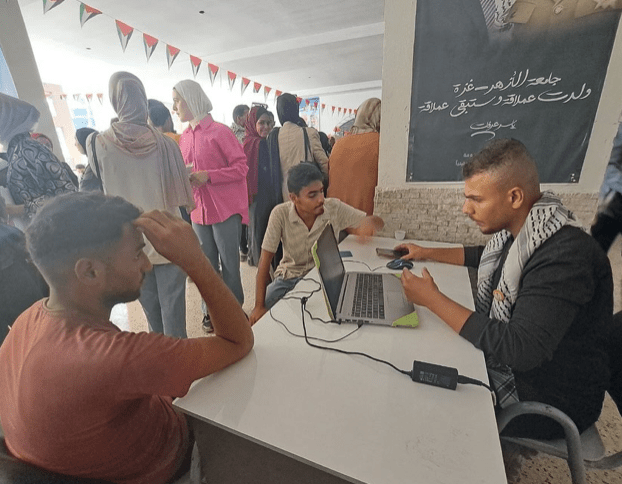
Our encampment was set up in September 2025 and received support from students, alumni, activists and the general public.
Those who joined the encampment stayed overnight on a rolling basis, while arrangements were made to provide sleeping bags, tents, food, batteries and other essentials.
By day 90, we had ditched the tents and instead built movable cabins and installed a gas burner. That allowed us to heat water and warm the cabins so that we could withstand the otherwise intolerable cold of winter.
Our encampment is believed to have been the longest-running protest encampment in Europe against the Gaza genocide.
You would imagine that as we were camped beside the UCD entrance and were determined to remain there, Orla Feely, the university’s president, would have engaged the camp in dialogue. Feely, however, would not negotiate.
In an October 2025 interview with The University Observer, a UCD newspaper, Feely said, “We recognize the right to peaceful protests for students – not people who are not associated with the university – for students, to protest peacefully on campus.”
The claim that the encampment involved “people who are not associated with the university” was inaccurate.
Students have very much been part of the encampment. Two UCD students were actually subjected to disciplinary proceedings for their participation.
The fact that those students were, in effect, threatened with being expelled from UCD shows that Feely was insincere when she “recognized” students’ right to peaceful protest.
To try and distance the university from the protest, the camp was designated the “N11 encampment” – due to its proximity to the N11 road – rather than the UCD encampment. That gave the misleading impression that we were protesting against a highway.
As the encampment was on public land, UCD could not evict us on its own. The college had previously issued “cease and desist” orders when an attempt was made in October to set up protest tents on campus.
The “cease and desist” orders raised questions about whether Palestine-related protests are allowed or forbidden on UCD’s premises.
In June 2024, UCD’s administration announced that it had reached an agreement with students to end a previous on-campus protest against the Gaza genocide. That protest was held at at time when students in various different countries set up similar encampments.
Only a redacted version of the agreement has been made public – after freedom of information requests were made.
UCD’s censorship of the agreement raises suspicions that it was aimed at preventing or restricting further protests.
In order to have our encampment at the UCD entrance dismantled, the college’s administration notified Dún Laoghaire-Rathdown Council in December 2025 that there was an encampment near its grounds and requested that it be cleared.
The local authority carried out that request in cooperation with the police, citing the pretext that the encampment “created unacceptable environmental hazards.”
The eviction – which took place before a new semester began at UCD in January – was presented as necessary to protect “public safety.”
UCD argued that the camp’s proximity to a “busy thoroughfare” had “created an environment of risk that warrants urgent intervention.”
Surveillance
In addition to constant CCTV surveillance, the UCD administration had employed a dozen security guards to monitor the camp at considerable financial strain.
The university had campus security follow students and stationed personnel outside a dormitory.
Many participants in the encampment had experienced waking up in the dead of night to find security shaking their tents, shining flashlights inside, and leaving intercoms turned on all night to prevent them from sleeping.
I have wondered if the UCD Estate Services – which is in charge of security at the university – was so brazen because most students taking part in the encampment were international or non-white or both. Taking part in the encampment taught me – the hard way – that perception matters.
We were not just exposed to the elements at the UCD entrance. One of our protesters was assaulted by an individual working on campus.
The protester was struck above the eye socket and needed medical attention.
We were also harassed by counterprotesters and livestreamed by hate groups. Our equipment was vandalized and some people driving by the encampment threatened us.
The encampment took place during a period when Ireland’s far right was particularly violent. Among the incidents which took place at the time of our encampment were riots at an accommodation center for refugees in Dublin and an arson attack on a similar facility in Drogheda, a town north of the Irish capital.
Constant fear
There was a constant fear among participants in our encampment that we would be attacked. We knew that our tents could easily be mistaken as shelters for asylum seekers and draw the ire of the far right.
Orla Feely, UCD’s president, has cited “academic freedom” as the reason why staff and researchers at the college may join partnerships with Israeli firms and institutions.
Where, it must be asked, is the academic freedom for Palestinians? All of Gaza’s universities were destroyed or badly damaged during the first few months of Israel’s genocidal war.
While UCD has been making an example of students who protest over Palestine, some relatively high-profile figures connected to the university have effectively sided with Israel and its European and North American allies.
Dan O’Brien, a UCD research fellow, has been vocal in calling for the scrapping of Ireland’s Occupied Territories Bill – legislation on banning imports from Israel’s settlements in the occupied West Bank. He has even hosted a seminar with Eugene Kontorovich, a prominent Israeli settler.
Ben Tonra, an international relations professor at UCD, is campaigning actively for Ireland to embrace Europe’s militarization more enthusiastically than it has done until now. The measures pushed by Tonra are completely at odds with Ireland’s traditional policy of neutrality – a policy backed by most of the Irish public.
Tonra is a director of the Irish Defence and Security Association (IDSA). Members of that lobby group include Lockheed Martin – the main maker of the F-35 jets that have been used to obliterate Gaza – and other firms which supply weapons to Israel.
Caitriona Heinl – another international relations specialist at UCD – is among IDSA’s founders, as well as being director of the Azure Forum, a “think tank” focused on “contemporary security strategy.” The Azure Forum has been advising weapons makers on how they should approach discussions concerning Ireland’s neutrality.
UCD has a selective approach to “academic freedom.”
Professors and research fellows who support Israel or the arms industry enjoy freedom. Students and graduates who protest against UCD’s partnerships with Israel get disciplined – or evicted from an encampment in the middle of the night.
Joshua Lobo is a writer based in Ireland.