

13 August 2026
Universities are bastions of free speech and intellectual inquiry. Or at least they are supposed to be. But when it comes to open discussion of injustice and oppression in Palestine, even many universities in the UK have shut down debate, cancelled lectures, obstructed meetings, disciplined faculty and students and even demanded that notices and posters on campus be torn down. A new report by the British Society for Middle East Studies (BRISMES) provides details of numerous recent instances. Printed below is the Executive Summary. For the full Report, click the link above.
Restrictions on Academic Freedom and Freedom of Expression in and Concerning North Africa
and the Middle East
Cases Documented by the BRISMES Committee on Academic
Freedom (2025–2026)
Published by The British Society for Middle Eastern Studies (BRISMES)
71-75 Shelton Street
Covent Garden
London WC2H 9JQ
brismes.ac.uk
First published: August 2026
© 2026 British Society for Middle Eastern Studies.
This publication may be quoted, reproduced and shared for non-commercial purposes, provided that appropriate acknowledgement is given and the material is not altered in a way that misrepresents its meaning or context. Suggested citation
BRISMES Committee on Academic Freedom (2026). Restrictions on Academic Freedom and Freedom of Expression in and Concerning the Middle East and North Africa: Cases Documented by the BRISMES Committee on Academic
Freedom (2025-2026). London: British Society for Middle Eastern Studies.
Acknowledgments
This report was written by members of the BRISMES Committee on Academic Freedom. BRISMES is grateful to all those who contributed information, documentation and comments during the preparation of this report.
EXECUTIVE SUMMARY
This report documents all cases addressed by the BRISMES Committee on Academic Freedom (CAF) and BRISMES Council between 1 January 2025 and 31 May 2026 concerning restrictions on academic freedom, freedom of expression, and the right to education in and concerning the Middle East and North Africa.
The BRISMES CAF was set up in 2019 to monitor and defend academic freedom in the research, study and teaching of Middle East Studies in the UK and anywhere in the world, including in academic institutions in the Middle East and North Africa. The report covers developments in the United Kingdom and Europe, as well as in the Middle East and North Africa region. Taken together, the cases reveal how academic freedom, freedom of expression, and the right to education are being constrained through a range of institutional, legal, political, and military mechanisms.
KEY FIGURES (2025–2026)
28 cases documented
8 cases in MENA
1 student mobility case
20 cases in UK/Europe
1 scholar-at risk case
7 countries in MENA covered
Academics and students at 13+ institutions directly targeted 18+ academic and research
institutes targeted by military attacks
In the United Kingdom and Europe, the report examines restrictions on lawful academic and political expression in universities and related academic institutions. All cases, with the exception of two, documented in this part of the report concern expression relating to Israel-Palestine. They include the cancellation of academic events, disciplinary action against staff and students, censorship of political expression on campus, employment disputes raising concerns about political discrimination, and sector level narratives that shape the boundaries of legitimate debate. Although universities and academic institutions in the UK and Europe operate within legal frameworks that formally protect freedom of expression and academic freedom, the cases documented here suggest that these protections are being weakened in practice by administrative barriers, broad interpretations of harassment and neutrality,
external political pressure, and the use of disciplinary processes to regulate lawful speech. The cumulative impact is a chilling effect on scholarship, teaching, protest, and public engagement, particularly for those working on or speaking about Israel Palestine.
In the Middle East and North Africa, the report documents more direct and often more severe forms of repression, including state-led restrictions on scholars, researchers, and educational institutions. These include the detention and prosecution of scholars and public intellectuals under national security,
terrorism, or espionage-related charges; the confiscation of research materials and interference with scholarly work; intimidation of independent educational initiatives operating outside state-controlled institutions; and military attacks on universities that disrupt teaching, research and student life. Cases from Egypt, Iran, Kuwait, Bahrain, Lebanon and the Occupied Palestinian Territory illustrate
how academic freedom is undermined not only by restrictions on speech, but alsoby attacks on the institutional and material conditions necessary for research, teaching, and learning.
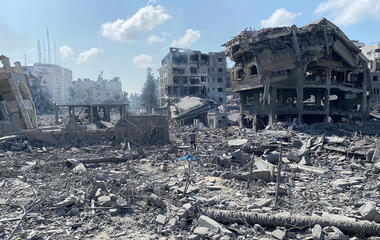
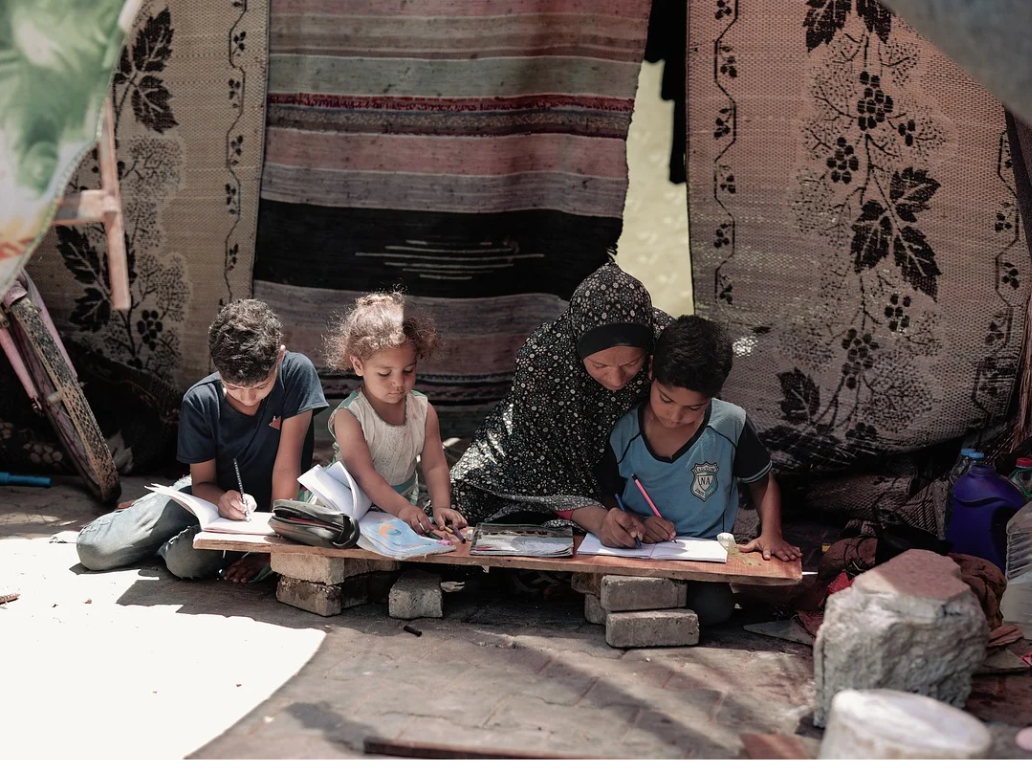
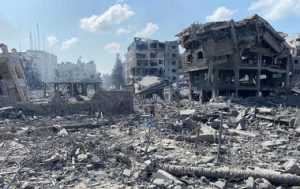
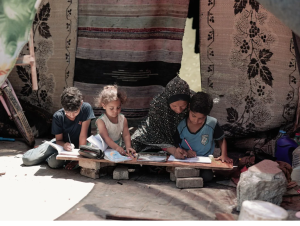
The report also highlights the growing importance of sanctuary and safe passage for scholars at risk, particularly scholars from conflict zones. It draws attention to the destruction of higher education in Gaza and the targeting of academics, as part of a longer-term pattern of scholasticide, and the urgent
need for international support for displaced scholars and for the rebuilding of educational institutions in conflict-affected settings. “Across very different contexts, restrictions on academic freedom share a common effect: narrowing the space in which scholars, students and public intellectuals can research, teach, speak and debate freely.”
Across these different contexts, several broad patterns emerge. First, states and institutions increasingly rely on the language of security, safety, public order, or neutrality to justify restrictions on expression and academic activity. Second, disciplinary and legal frameworks are often used in ways that transform lawful expression into alleged misconduct or criminality. Third, repression frequently targets not only speech, but also the production, circulation, preservation, and institutional support of knowledge itself, whether through interference with research, attacks on universities, restrictions on academic mobility, or pressure on scholarly activity. Fourth, attacks on universities and restrictions on movement show that academic freedom cannot be separated from the right to education and from the wider political conditions in which scholars and students live and work. Finally, many of the cases documented here are transnational in both their causes and their possible remedies, including diplomatic pressure, cross-border scholarly solidarity, international legal norms, and the responsibilities of universities and
governments beyond the immediate site of abuse.
The report argues that academic freedom must be understood as part of a wider ecosystem of rights, including freedom of expression, freedom of association, freedom from arbitrary detention, and the right to education. Where those rights are eroded, academic freedom is also at risk. The restrictions documented here differ in form and severity, but they are connected by their shared effect of narrowing the space for critical thought, dissent, and intellectual exchange.
“Academic freedom cannot be understood in isolation from freedom of expression, freedom of association, freedom from arbitrary detention, and the right to
education.”
BRISMES therefore calls on universities and research institutions to uphold their obligations to protect free expression and academic freedom; on governments and public authorities to refrain from criminalising peaceful scholarly and political activity and to facilitate safe pathways for scholars at risk; on international organisations to strengthen monitoring and accountability for attacks on scholars and educational institutions; and on scholarly associations and academic networks to continue documenting and speaking out against violations, supporting those at risk, and fostering international solidarity.
Protecting academic freedom therefore requires not only responding to individual violations, but also confronting the institutional, political, legal, and militarystructures that enable repression, exclusion, and the erosion of intellectual autonomy.